Cultured pearls are often described as pearls grown with human assistance, but what does that actually mean? How does a small intervention lead to a lustrous pearl, and how much of the process is controlled by people?
The answer lies in the relationship between pearl farmers and the mollusks that produce pearls. People initiate the process, but the animal does the biological work. Once pearl formation begins, the mollusk gradually deposits layers of material that develop into the pearl.
Understanding how cultured pearls form also helps clear up a common misconception: cultured pearls are not imitation pearls. They are genuine pearls created inside living mollusks, just like natural pearls, although the process begins differently.
What Is a Cultured Pearl?
A cultured pearl is a genuine pearl whose formation has been deliberately initiated by human intervention. Pearl farmers use specialized techniques to encourage certain oysters or freshwater mussels to produce pearls under managed conditions.
The mollusk remains responsible for creating the pearl. It deposits layers of material around the developing structure, gradually building the pearl’s distinctive surface and luster.
This is what separates a cultured pearl from an imitation pearl. Imitation pearls are manufactured from materials such as glass or plastic to resemble genuine pearls. Cultured pearls, by contrast, develop through a biological process inside a living animal.
Natural pearls and cultured pearls are both genuine. The key difference is how their formation begins: natural pearls develop without deliberate human intervention, while cultured pearls begin after people initiate the process.
To understand the biological process behind pearl growth, explore our guide to how pearls are formed.
How Do Cultured Pearls Form?
Cultured pearl formation involves several stages, from preparing the mollusk to allowing the pearl to grow. The exact procedure depends on the pearl-producing species, the type of pearl being cultivated, and the methods used by the farm.
Step 1: Selecting and Preparing the Mollusk
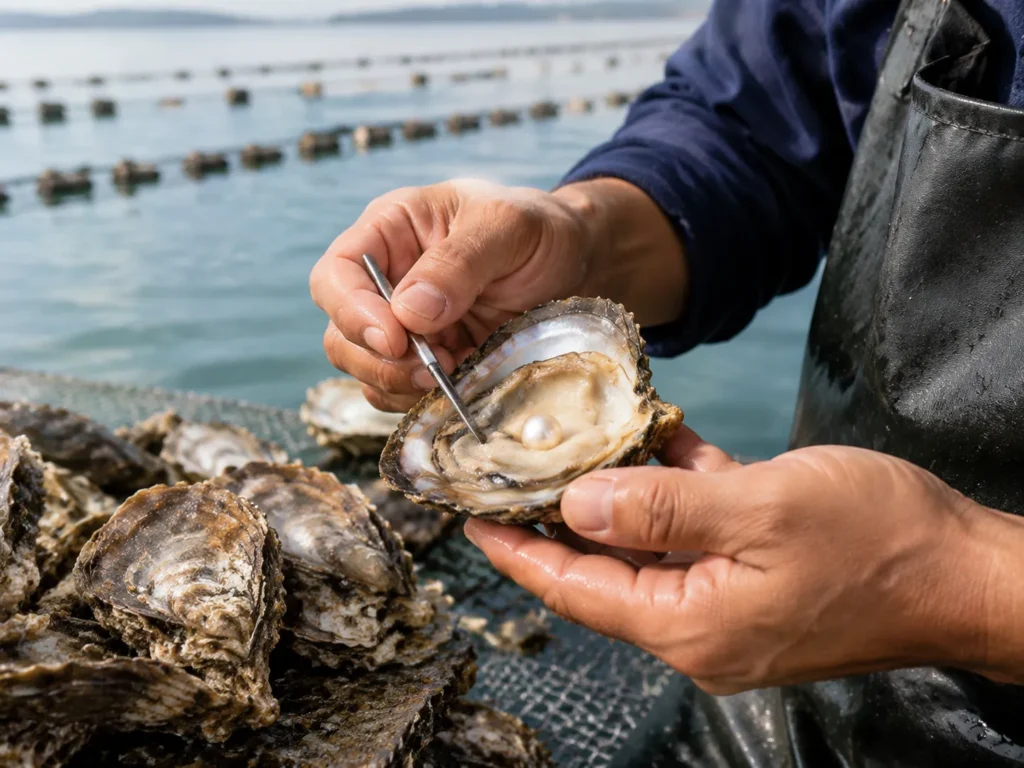
Pearl farming begins with suitable pearl-producing mollusks. Depending on the type of pearl, these may be saltwater pearl oysters or freshwater mussels.
Farmers consider factors such as the species, health, size, and condition of the animal. The mollusk must be healthy enough to tolerate the procedure and continue growing afterward.
In many operations, mollusks are raised or maintained under carefully managed conditions before the pearl-forming process begins. Water quality, temperature, food availability, and overall environmental health can affect the animal’s condition and its ability to produce a pearl.
Successful pearl cultivation therefore depends on more than the initial procedure. The health of the mollusk throughout the growing period matters as well.
Step 2: Initiating Pearl Formation
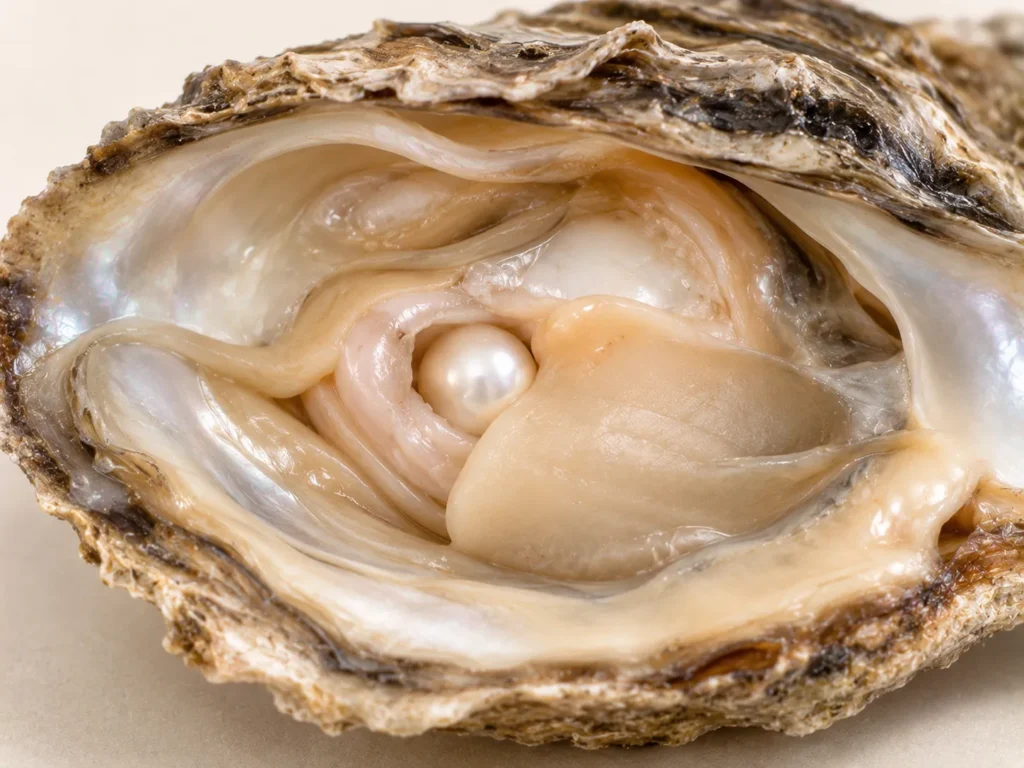
Once a suitable mollusk is ready, a trained technician performs a procedure to initiate pearl formation. The method varies by species and pearl type.
In many bead-nucleated cultured pearls, the technician inserts a small bead together with a piece of mantle tissue from a donor mollusk. The mantle is the tissue responsible for producing shell material. The transplanted tissue helps establish the pearl-forming area, while the bead serves as a nucleus around which the pearl can develop.
Other cultured pearls are tissue-nucleated without an inserted bead. In these cases, a small piece of mantle tissue is used to initiate pearl formation, and the resulting pearl develops without a bead nucleus.
These methods are not interchangeable in every situation. Different species and farming techniques require different approaches, which is why not all cultured pearls are produced in exactly the same way.
Step 3: The Pearl Sac Develops
After the procedure, the transplanted mantle tissue can develop into a pearl sac. This specialized tissue surrounds the developing pearl and produces the material that gradually builds its layers.
The pearl sac is central to the process. Rather than simply placing a finished pearl inside the animal, the procedure creates the conditions for the mollusk to grow a new pearl structure.
The animal’s response to the procedure is important. Some mollusks may not survive, while others may recover but fail to produce a marketable pearl. The outcome depends on factors such as the species, the animal’s health, the technique used, and growing conditions.
This is one reason pearl cultivation requires expertise and careful management.
Step 4: Nacre Builds Up Layer by Layer
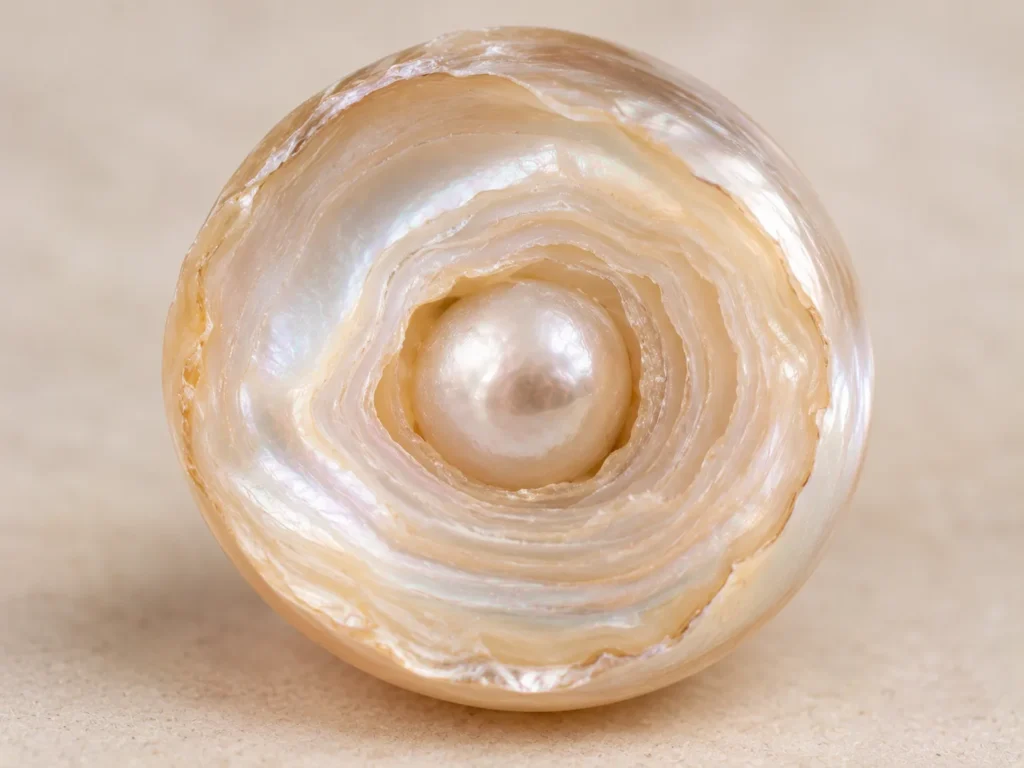
As the pearl develops, the pearl sac deposits layers of material. In many familiar cultured pearls, this material is nacre, a substance made primarily of microscopic aragonite crystals arranged within an organic matrix.
Layer by layer, nacre builds the pearl’s surface and contributes to its luster. Light interacts with these layers, creating the soft glow and subtle reflections associated with fine pearls.
The quality of this process influences the pearl’s eventual appearance. Nacre thickness and structure, together with other factors, can affect luster, surface quality, and durability.
A cultured pearl is therefore not simply a bead coated with paint or a synthetic finish. In a genuine nacreous cultured pearl, the mollusk produces the nacre that forms the pearl’s outer layers.
Step 5: The Pearl Grows Over Time
Pearls do not form instantly. They need time to develop as the mollusk continues depositing material around the growing structure.
The time required varies according to the pearl species, cultivation method, growing environment, and the size and quality desired. Some cultured pearls may be harvested within months, while others remain in the mollusk for a year or longer. There is no single growing period that applies to every pearl.
During this stage, farmers monitor the mollusks and their environment. Conditions that support healthy growth can improve the chances of producing pearls with desirable characteristics, although no farm can guarantee a particular shape, luster, or surface quality.
Step 6: Harvesting and Evaluating the Pearls
When the growing period is complete, the pearls are harvested. The mollusks are handled according to the farming method, and the pearls are removed for inspection.
Each pearl is then evaluated for characteristics such as luster, surface quality, shape, size, and color. The results can vary considerably, even among pearls grown on the same farm.
Some pearls have exceptional luster and relatively clean surfaces. Others may have visible blemishes, irregular shapes, or less pronounced reflections. These differences are a normal part of pearl cultivation.
Harvesting is not the end of the story for every mollusk. Depending on the species, its condition, and the farming method, some mollusks may be returned to cultivation or used in another production cycle. Practices vary across pearl farms.
Do All Cultured Pearls Have a Bead Nucleus?
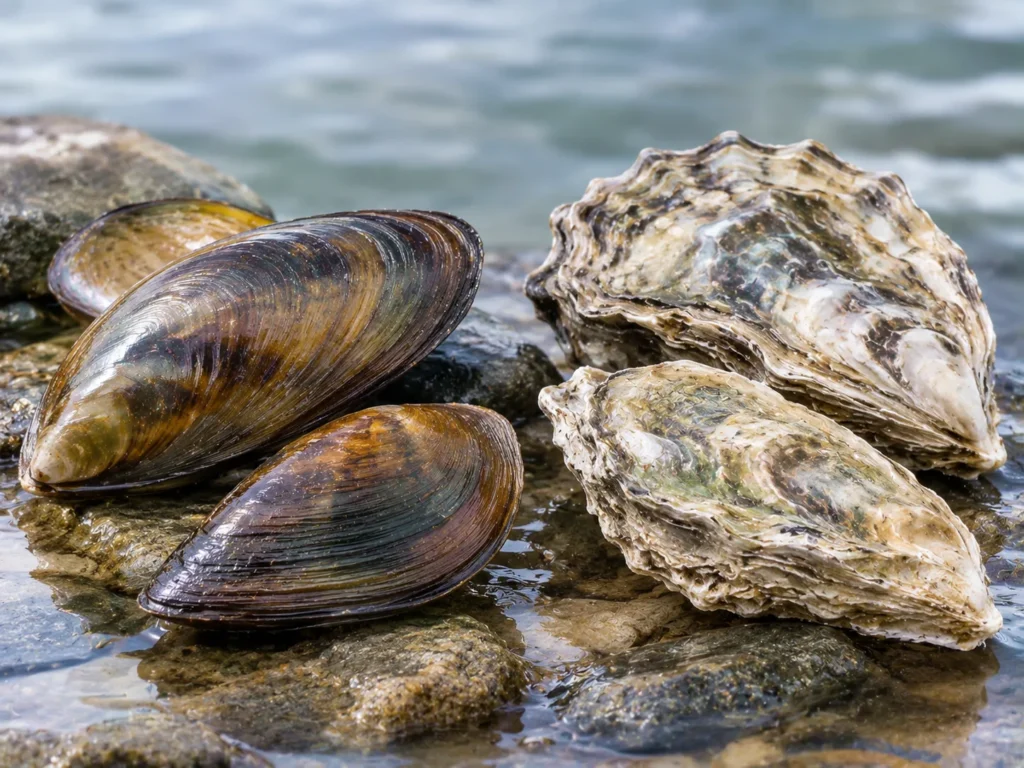
No. Not all cultured pearls contain a bead nucleus.
Many bead-nucleated saltwater cultured pearls are produced by inserting a bead along with donor mantle tissue. The bead provides a central structure around which nacre can accumulate.
Many traditional freshwater cultured pearls, however, are tissue-nucleated and grow without an inserted bead. Other freshwater cultivation methods can use bead nuclei, so it would be inaccurate to assume that every freshwater pearl is beadless or that every saltwater pearl is produced in precisely the same way.
The presence or absence of a bead is only one part of a pearl’s formation story. It does not, by itself, determine whether a pearl is genuine or establish its overall quality.
For buyers, the more useful questions are whether the pearl is genuine, what type it is, how it was produced, and how well it performs in terms of luster, surface quality, shape, and other relevant characteristics.
How Long Does It Take to Grow a Cultured Pearl?
The time required to grow a cultured pearl varies widely. It depends on the mollusk species, the pearl type, the cultivation technique, environmental conditions, and the desired result.
Some pearls can be harvested after several months, while others require a year or more of growth. Larger or particularly desirable pearls may need longer cultivation, depending on the method and species involved.
Time alone does not guarantee quality. A pearl that has been growing for a long period is not automatically more valuable than one harvested earlier. Its final appearance depends on the quality of its growth, the condition of the mollusk, and the characteristics of the resulting pearl.
This is why pearl farmers balance growing time with animal health, environmental conditions, and the practical needs of cultivation.
What Factors Affect Cultured Pearl Quality?
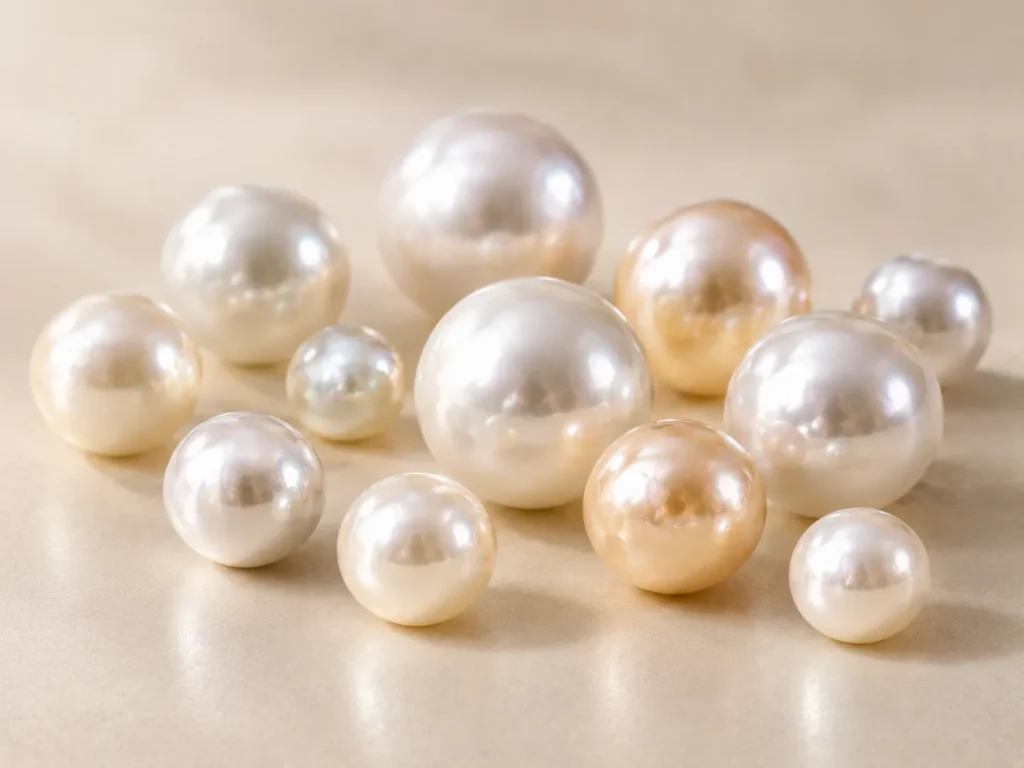
Although pearl farmers can influence growing conditions, they cannot fully control the final characteristics of every pearl. Several factors contribute to the quality of the finished gem.
Luster
Luster describes the way light reflects from a pearl’s surface and interacts with its nacre. Strong, clear luster often gives a pearl a bright, lively appearance.
The structure and quality of the nacre play an important role in this effect. A pearl with weak luster may appear dull even if it has an attractive color or a relatively smooth surface.
Surface Quality
Cultured pearls can develop natural marks, pits, spots, or irregularities during growth. The visibility, number, and location of these features influence how clean the pearl appears.
A relatively clean surface is generally preferred when other qualities are comparable, although some buyers also appreciate the individual character of pearls with distinctive surface features.
Shape
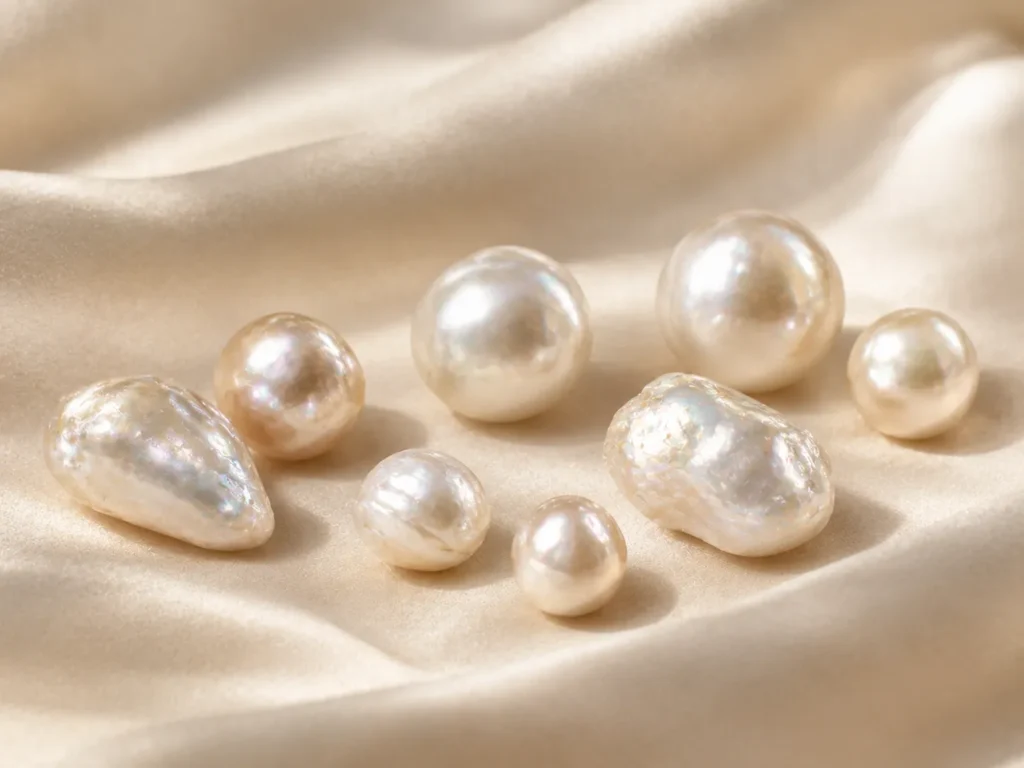
Cultured pearls may be round, near-round, oval, drop-shaped, button-shaped, or baroque. Round pearls are often sought after for classic strands, while unusual shapes can be desirable in contemporary jewelry.
The value of a particular shape depends on the pearl type, overall quality, and market demand.
Color and Overtone
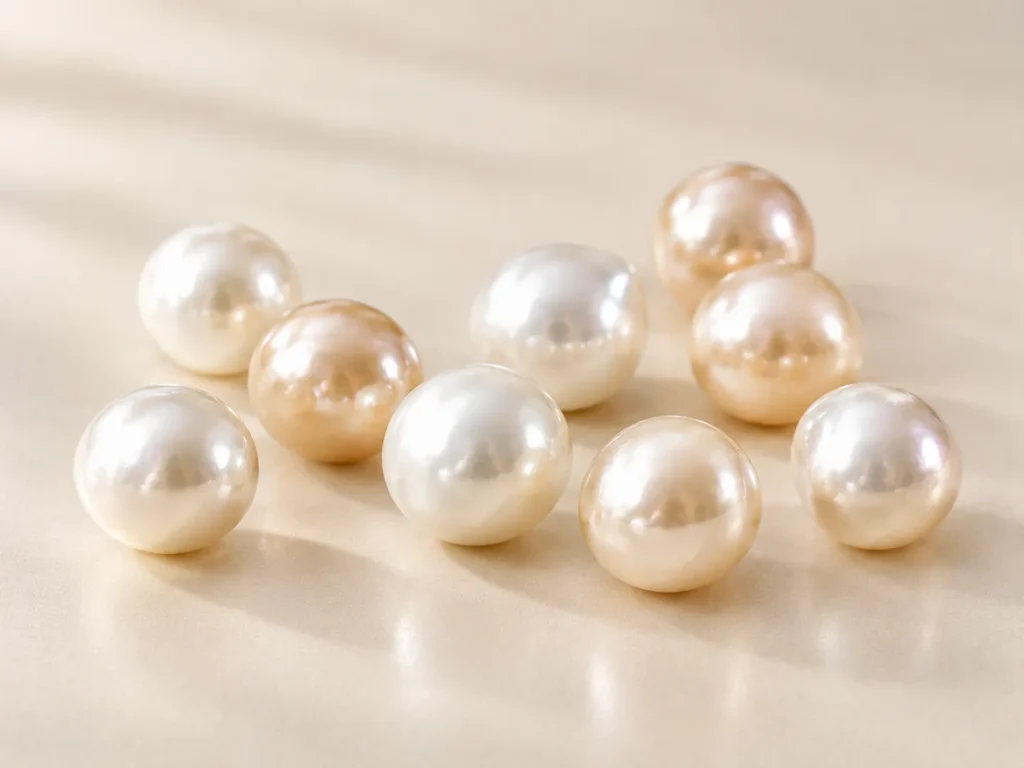
Pearl color depends on several influences, including the mollusk species and the conditions under which the pearl develops. Cultured pearls may appear white, cream, pink, silver, gold, gray, green, or in other tones.
Some pearls also display overtones that add depth to their appearance. Color preference varies by pearl type, jewelry style, and individual taste.
Nacre Quality
Nacre is especially important in pearls that develop their characteristic appearance through layers of this material. Its thickness, structure, and quality influence luster and can affect how well the pearl withstands wear.
However, nacre thickness should not be considered in isolation. The pearl’s overall quality depends on multiple factors, and evaluation methods can vary by pearl type.
Are Cultured Pearls Real Pearls?
Yes. Cultured pearls are real pearls because they form inside living mollusks through a biological process.
The term cultured describes the human role in initiating pearl formation. It does not mean that the pearl is fake, synthetic, or simply coated to imitate the appearance of a pearl.
Natural pearls and cultured pearls can both display beautiful luster and a wide range of colors and shapes. Their origins differ, and natural pearls are generally much rarer in the jewelry market, but rarity alone does not determine the quality or value of an individual pearl.
Imitation pearls are different because they are manufactured to look like pearls rather than grown by mollusks.
If you would like to understand the distinction in greater detail, read our guide to natural pearls vs. cultured pearls.
Are Cultured Pearls as Valuable as Natural Pearls?
Natural pearls are generally rarer than cultured pearls, which is one reason exceptional natural pearls can command high prices. Cultured pearls, however, vary widely in quality and value.
A cultured pearl with excellent luster, attractive color, a desirable shape, and a clean surface may be much more valuable than a low-quality pearl of the same general type. Size, pearl variety, origin, market demand, and the quality of the finished jewelry can also affect price.
It is therefore misleading to judge a pearl’s value solely by whether it is natural or cultured. Origin is important, but it is only one part of the assessment.
When buying pearls, look for clear information about their type and origin, and evaluate their visible quality rather than relying on broad claims such as “rare,” “premium,” or “high grade” without supporting details.
Frequently Asked Questions
Are cultured pearls made by humans?
Humans initiate the pearl-forming process, but the pearl itself is produced by a living mollusk. Pearl farmers use specialized techniques to start cultivation, after which the animal deposits material that builds the pearl.
Are cultured pearls fake?
No. Cultured pearls are genuine pearls formed inside living mollusks. They are different from imitation pearls, which are manufactured from materials such as glass or plastic.
Do cultured pearls grow around a plastic bead?
Not generally. Some bead-nucleated cultured pearls use a solid bead nucleus, commonly made from shell material. Many tissue-nucleated cultured pearls develop without an inserted bead. The exact method depends on the pearl type and cultivation technique.
Do oysters have to be killed to harvest cultured pearls?
Not always. Harvesting practices vary. Some cultivation methods involve removing a pearl while keeping the mollusk alive, and some mollusks may be used for subsequent production cycles. The outcome depends on the species, condition of the animal, and farming procedure.
Are freshwater cultured pearls different from saltwater cultured pearls?
Yes. They are produced by different types of mollusks and often differ in cultivation methods, typical shapes, colors, and market characteristics. However, there is considerable variation within both groups.
How can you tell if a cultured pearl is genuine?
Appearance alone may not always establish whether a pearl is genuine or whether it is natural or cultured. A qualified gemologist or reputable gemological laboratory can examine valuable pearls using appropriate methods.
Final Thoughts
Cultured pearls begin with human assistance, but their beauty is created by nature. Pearl farmers initiate the process and provide suitable growing conditions; the mollusk then develops the pearl by depositing layers of material over time.
From the formation of the pearl sac to the gradual buildup of nacre, each stage influences the final result. Differences in species, cultivation methods, growing conditions, and individual pearl characteristics explain why cultured pearls vary so much in appearance and quality.
Understanding how cultured pearls form makes it easier to appreciate what they are: genuine organic gems shaped by both careful cultivation and the biology of a living animal. Whether you are exploring pearl science or comparing pearls before a purchase, knowing how they grow is a valuable first step.