Pearls have a remarkable origin. Unlike most gemstones, which are mined from the earth and cut or polished into their final form, pearls grow inside living mollusks. Their beauty develops gradually, through a biological process that transforms microscopic layers of mineral material into a luminous gem.
But how does a pearl actually begin to form? Does a grain of sand really get inside an oyster and become a pearl? And are cultured pearls created in the same way as natural pearls?
The answers are more interesting than the familiar stories suggest. Understanding how pearls form reveals not only what makes them beautiful, but also why different pearls vary so much in appearance, quality, and value.
What Causes a Pearl to Form?
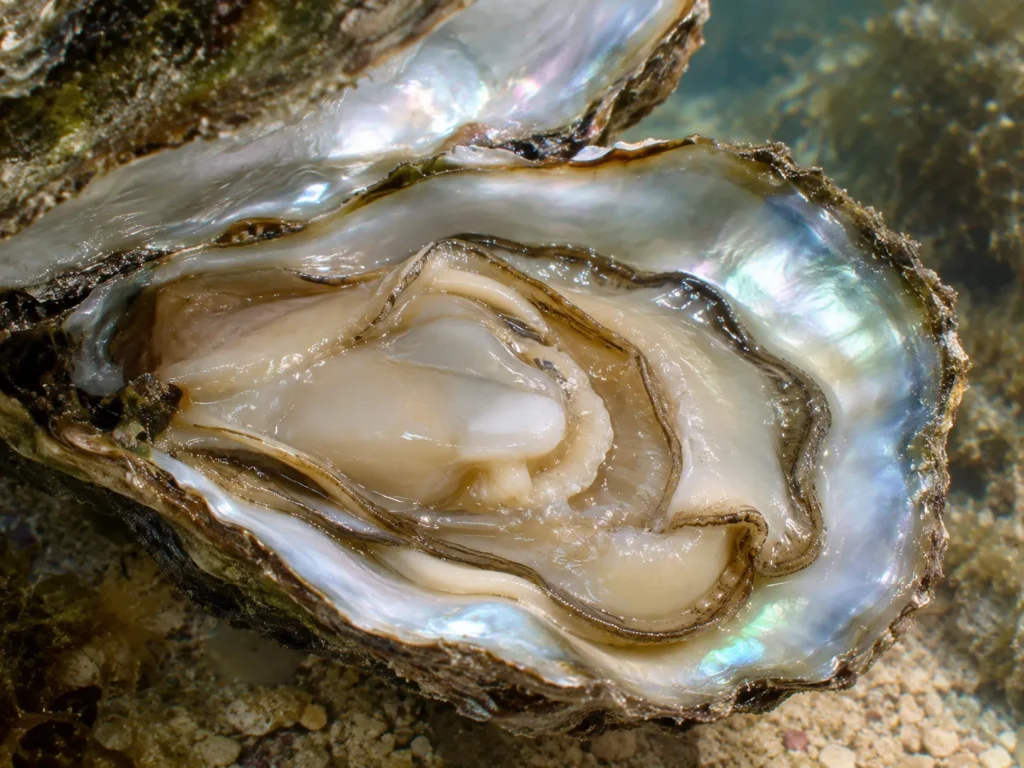
Pearls form inside certain mollusks, including pearl-producing oysters and freshwater mussels. These animals have soft bodies protected by hard shells, and a specialized tissue called the mantle helps produce the material that lines the inside of the shell.
Under certain circumstances, cells associated with the mantle can develop into a pearl-forming structure known as a pearl sac. This structure secretes layers of material that gradually build a pearl.
In natural pearl formation, the process begins without human intervention. A biological disturbance or foreign material may become involved, prompting the mollusk to produce a protective response. The exact circumstances vary, and the familiar explanation that every pearl begins with a grain of sand is misleading. Sand is not the universal cause of pearl formation.
In cultured pearl production, people deliberately initiate the process by introducing specific mantle tissue, sometimes together with a shell bead, into a suitable host mollusk. The mollusk then carries out the actual biological work of forming the pearl.
In both cases, the pearl develops inside a living animal. The difference is how the process begins.
If you are new to pearls, start with our guide to what a pearl is to understand what pearls are and why they are valued for their natural beauty.
How Do Pearls Form Step by Step?
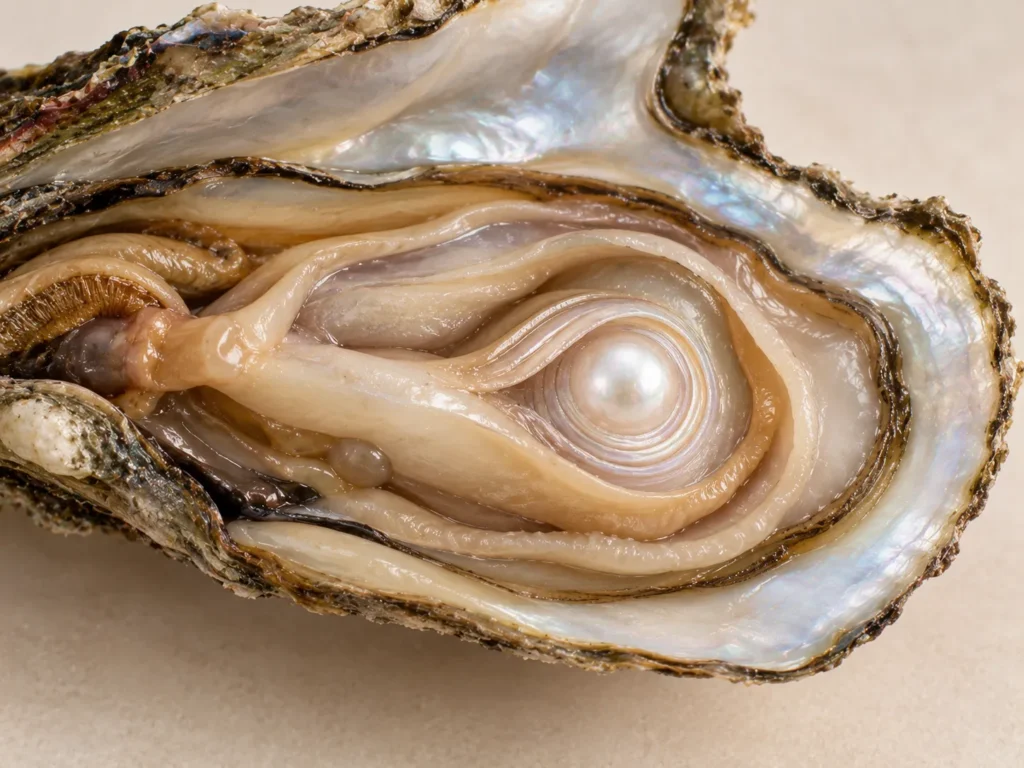
Pearl formation is not an overnight event. It involves a sequence of biological processes, followed by a period of growth during which the pearl gradually develops its structure and appearance.
1. A Pearl-Forming Process Begins
In a natural pearl, a biological disturbance within the mollusk can lead to the development of pearl-forming tissue. The precise trigger is not always known, and it is not necessarily a grain of sand.
For cultured pearls, pearl farmers deliberately initiate the process. Depending on the cultivation method, a technician introduces a small piece of mantle tissue, either on its own or alongside a shell bead, into the host mollusk.
The introduced tissue contains cells capable of producing the materials needed to build a pearl. These cells help establish the structure that will surround the developing pearl.
2. A Pearl Sac Develops
The next important stage is the formation of a pearl sac. This specialized tissue surrounds the developing pearl or, in bead-cultured pearls, the implanted nucleus.
The cells lining the pearl sac produce the substances that gradually accumulate to form the pearl. This is a crucial part of the process: the mollusk does not simply allow a foreign object to sit inside its body. Instead, living tissue actively builds the material that becomes the pearl.
The structure and activity of the pearl sac influence how the pearl grows, including its internal structure and the way its layers develop.
3. Layers of Nacre Begin to Accumulate
One of the most important materials in pearl formation is nacre, often called mother-of-pearl. It is composed mainly of microscopic calcium carbonate crystals, typically in the mineral form aragonite, together with a small amount of organic material.
The pearl-forming cells deposit these materials in successive layers. Over time, the layers build up, creating the pearl’s structure and contributing to its characteristic appearance.
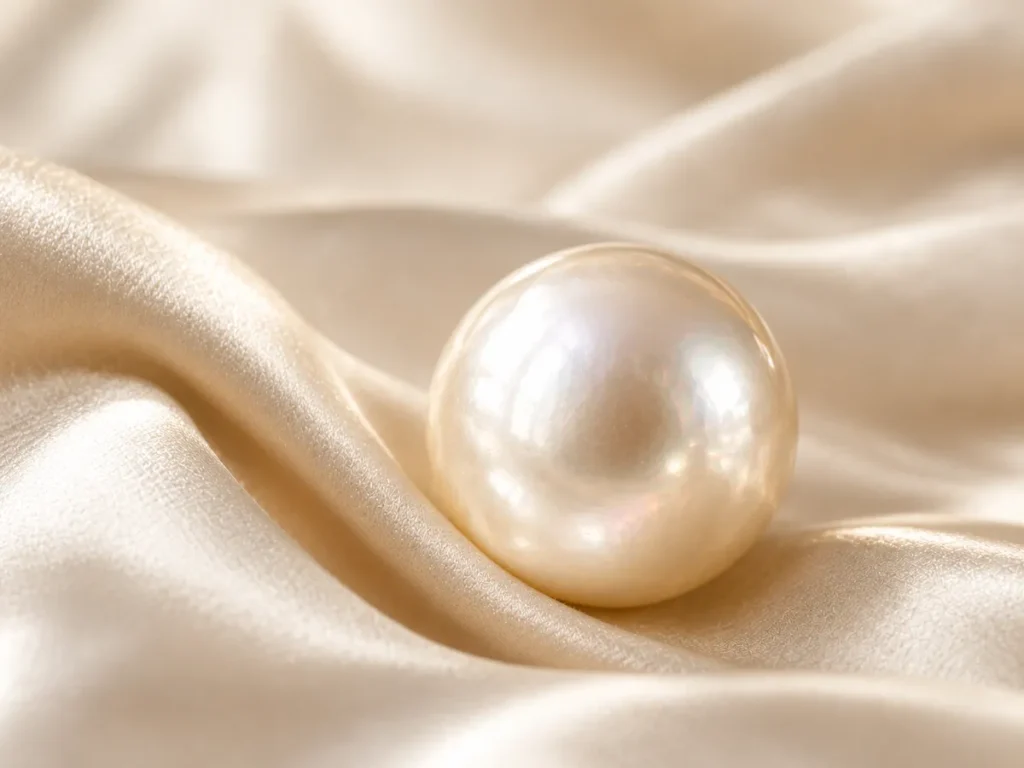
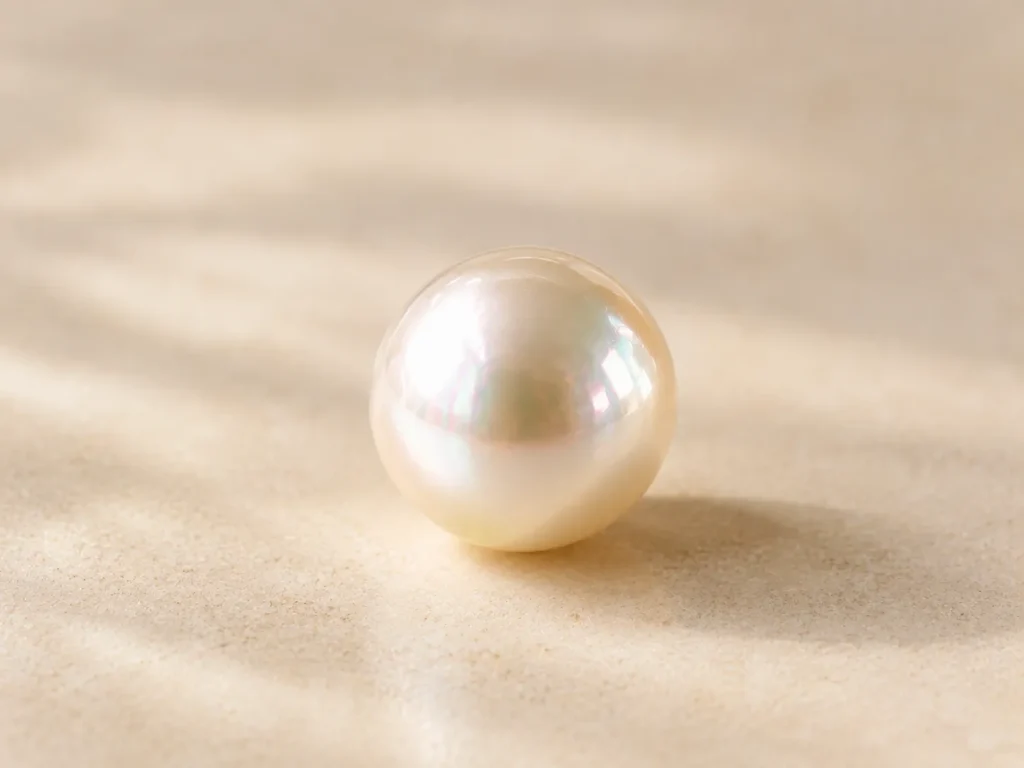
Nacre is also responsible for much of a pearl’s visual appeal. Light interacts with the microscopic layers, producing the soft glow and subtle iridescence associated with fine pearls.
The quality of this layered structure matters. Well-developed nacre can contribute to attractive luster, while the thickness, arrangement, and condition of the layers influence how the pearl looks and performs.
4. The Pearl Continues to Grow
As additional layers accumulate, the pearl gradually increases in size. Its eventual appearance depends on several factors, including the mollusk species, the cultivation method where applicable, the growing environment, and the length and conditions of its growth.
Not every pearl becomes perfectly round. The shape depends partly on how the pearl develops within its surrounding tissue and, in bead-cultured pearls, on the nucleus and the way nacre forms around it.
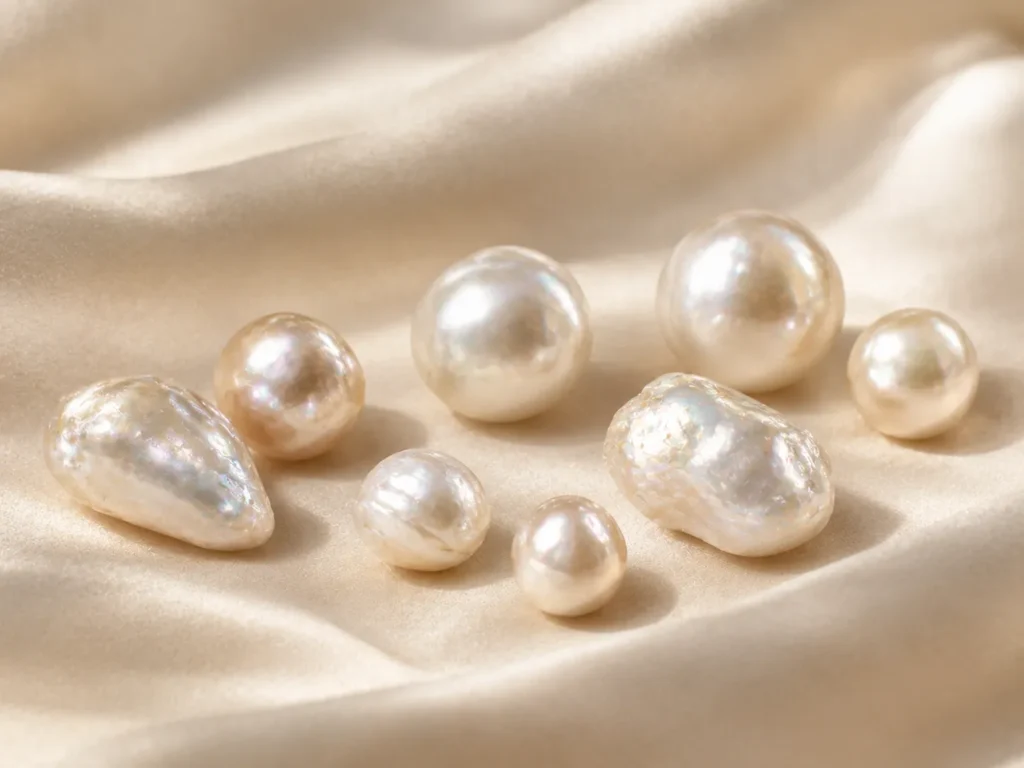
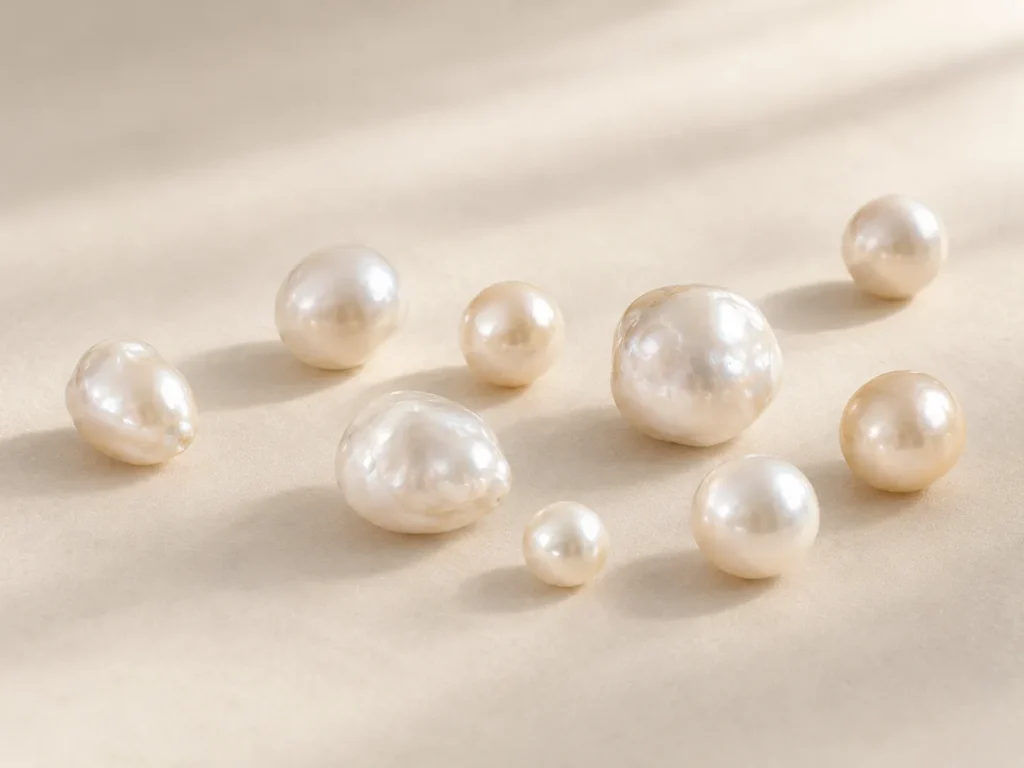
Some pearls become round or near-round, while others develop oval, drop-shaped, button-shaped, or irregular baroque forms. These variations are a natural part of pearl growth rather than evidence that a pearl is necessarily defective.
5. The Pearl Is Harvested
Natural pearls may be discovered in wild mollusks, but natural pearl formation is uncommon. Cultured pearls, by contrast, are grown through managed pearl-farming operations.
Farmers monitor the mollusks during cultivation, maintaining suitable conditions and managing risks such as disease, environmental stress, and damage. When the pearls are ready, they are harvested and assessed for their size, shape, luster, surface quality, and other characteristics.
The growth period varies according to pearl type and farming conditions. There is no single timetable that applies to every pearl.
How Are Natural Pearls Different from Cultured Pearls?
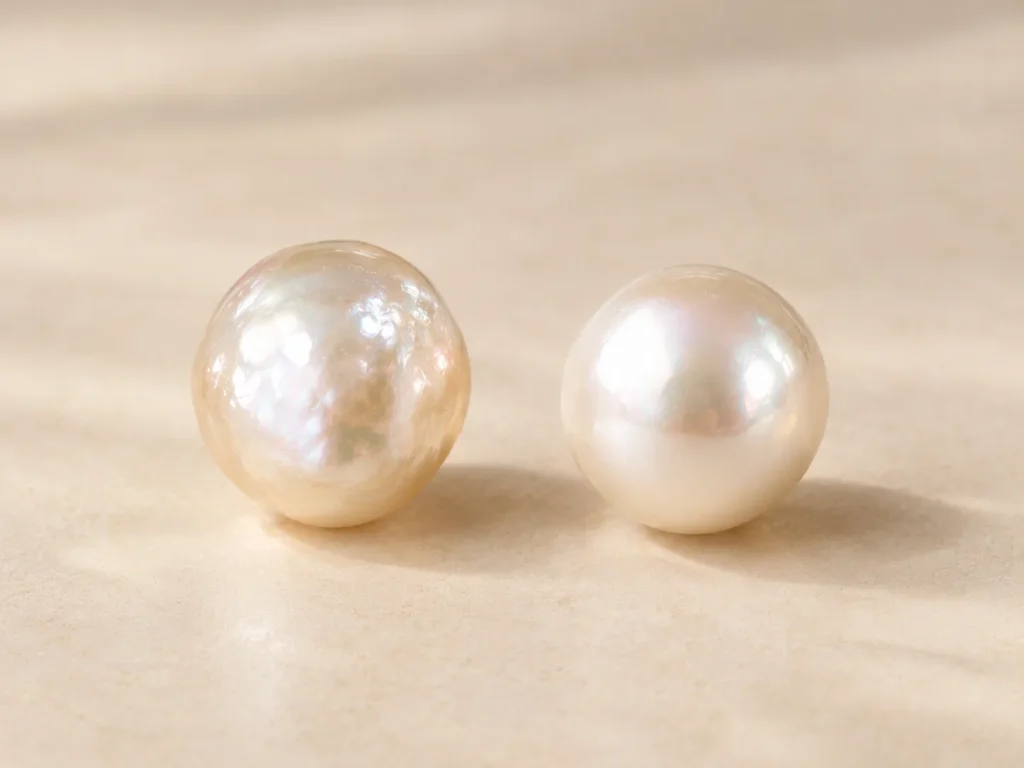
The key difference is human involvement in starting the process.
Natural Pearls
Natural pearls form without deliberate human intervention. A pearl-forming process begins inside a wild mollusk, and the animal produces the material that builds the pearl.
Because this process occurs unpredictably in nature, natural pearls suitable for jewelry are rare. They are not simply ordinary pearls that have been left to grow longer, and their rarity can make them especially valuable.
Cultured Pearls
Cultured pearls form after people deliberately initiate pearl growth within a host mollusk. Pearl technicians introduce mantle tissue, sometimes with a shell bead, and the mollusk then develops the pearl through its own biological processes.
Cultured pearls are genuine pearls, not imitation products. They are formed by living mollusks and consist of the materials produced during pearl growth. Human intervention starts the process, but it does not replace the mollusk’s role in building the pearl.
Today, the vast majority of pearls sold in the jewelry market are cultured.
For buyers, the distinction matters because natural and cultured pearls differ in rarity, availability, and often price. However, the word “cultured” does not automatically mean low quality. Cultured pearls can display exceptional luster, attractive color, and excellent surface quality.
Although both are genuine pearls, they differ in how their formation begins. For a closer comparison of their origins, rarity, and value, read our guide to natural pearls vs. cultured pearls.
How Do Freshwater and Saltwater Pearls Form?
Pearls can form in both freshwater and saltwater environments. The basic biological principle is similar, but the mollusk species and cultivation methods differ.
Freshwater Pearls
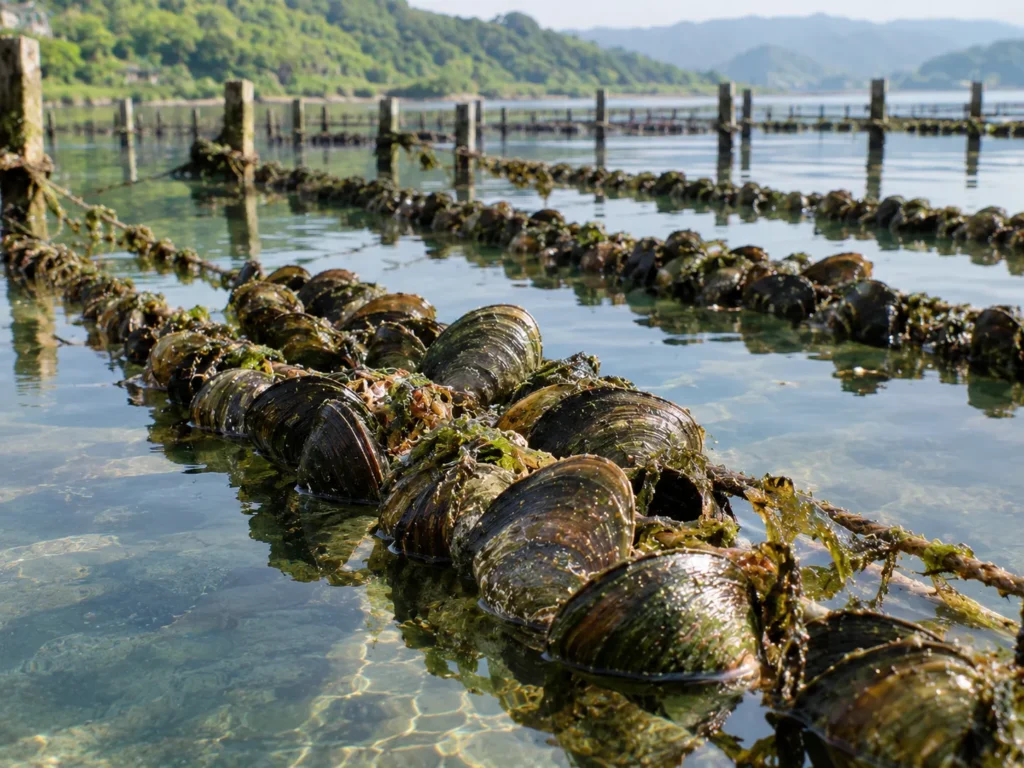
Freshwater pearls are generally cultivated in freshwater mussels living in environments such as lakes, rivers, and ponds.
Many traditional freshwater cultured pearls are tissue-nucleated. In this method, a small piece of mantle tissue is introduced into the mussel without a solid bead nucleus. The pearl-forming tissue then produces layers of nacre.
Some modern freshwater pearls are bead-nucleated, however, so not all freshwater pearls share the same internal structure.
Freshwater pearls are available in a broad range of sizes, shapes, and colors. Their appearance depends on the species, cultivation technique, and growing conditions.
Saltwater Pearls
Saltwater pearls are cultivated in marine mollusks, including pearl oysters. The major commercial types include Akoya, Tahitian, and South Sea pearls.
Many saltwater cultured pearls are bead-nucleated. A technician inserts a shell bead together with a small piece of mantle tissue into the host mollusk. The tissue develops into a pearl sac, which deposits nacre around the bead as the pearl grows.
The different oyster species and growing environments help explain why Akoya, Tahitian, and South Sea pearls can differ in size, color, luster, and other characteristics.
Although freshwater and saltwater pearls develop in different environments and may be produced using different methods, both rely on the mollusk’s natural ability to form pearl material.
Freshwater and saltwater pearls differ in their growing environments and the mollusks that produce them. Explore the different types of pearls to learn more about their distinctive characteristics.
What Gives Pearls Their Luster?
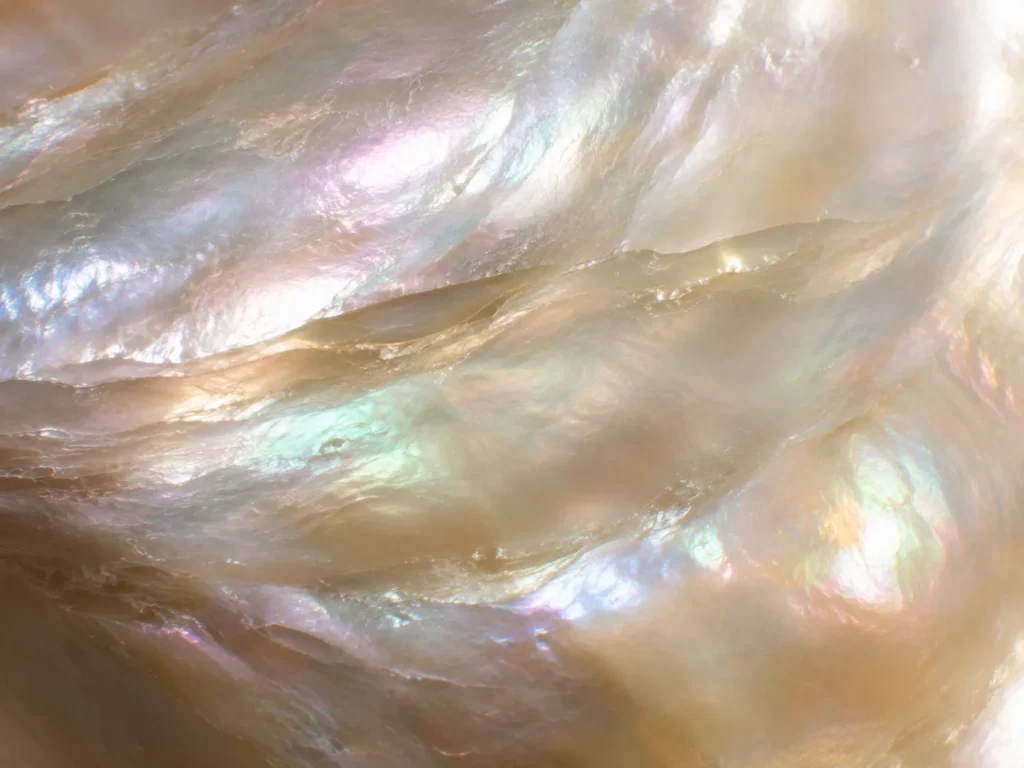
A pearl’s luster is the quality and intensity of light reflected from its surface and near-surface layers. It is one of the most noticeable features when comparing pearls.
Nacre consists of microscopic mineral crystals arranged in layers, together with organic material. When light interacts with these layers, it produces the characteristic glow associated with pearls. The structure and condition of the nacre influence how sharp, bright, or soft that glow appears.
High-quality pearls often show clear reflections and a sense of depth rather than looking dull or chalky. However, luster is only one part of pearl quality. Surface condition, shape, size, color, and other factors also influence a pearl’s overall appearance and value.
This is why two pearls of similar size and color can look noticeably different when placed side by side.
How Long Does It Take for a Pearl to Form?
Pearl formation takes time, but the exact duration depends on the pearl type, mollusk species, cultivation method, and growing conditions.
Many cultured pearls require months to years of development before harvest. During this period, the mollusk must remain healthy enough to continue producing the layers that build the pearl.
A longer growing period does not automatically guarantee a better pearl. The result depends on the quality and consistency of growth, the condition of the nacre, and the characteristics of the finished pearl.
Pearl farmers must balance growth time with the health of the mollusks and the conditions of the farming environment. Even under managed conditions, not every mollusk produces a pearl of commercial quality.
Can You Tell How a Pearl Formed by Looking at It?
A pearl’s outward appearance can offer clues, but it usually cannot establish with certainty whether the pearl is natural or cultured.
Roundness, color, size, and luster are not reliable proof on their own. Natural and cultured pearls can share similar outward characteristics, and both can vary widely in quality.
Gemological laboratories use methods such as X-ray imaging to examine a pearl’s internal structure. These examinations can help distinguish natural pearls from bead-cultured and non-bead-cultured pearls.
If you are considering a valuable pearl, an appropriate gemological report is a more reliable way to establish its identity than relying on appearance or a seller’s description alone.
Why Understanding Pearl Formation Matters
Knowing how pearls form makes it easier to appreciate what you are buying. A pearl is not simply a smooth object produced by an oyster or mussel. It is the result of a complex biological process in which living tissue gradually builds a layered gem.
This process helps explain why pearls differ in shape, luster, color, and structure. It also clarifies why cultured pearls are genuine pearls, why natural pearls are rare, and why the quality of individual pearls varies.
Whether you are drawn to the classic glow of Akoya pearls, the dark colors of Tahitian pearls, the warm tones of South Sea pearls, or the versatility of freshwater pearls, understanding their origins is a useful starting point for exploring the wider world of pearls.
If you are new to the subject, start with our guide to what a pearl is and continue exploring the different types of pearls and the qualities that make each one distinctive.
Frequently Asked Questions
Do pearls form from grains of sand?
Not usually in the simple way described in popular stories. Natural pearl formation involves biological processes within a mollusk, and a grain of sand is not the universal cause. Cultured pearl formation is deliberately initiated by introducing mantle tissue, sometimes with a shell bead.
Are cultured pearls real pearls?
Yes. Cultured pearls are genuine pearls formed inside living mollusks. Human intervention initiates the process, but the mollusk produces the materials that build the pearl.
Do all oysters produce pearls?
No. Only certain mollusk species are capable of producing pearls suitable for jewelry, and even pearl-producing mollusks do not produce a marketable pearl every time.
Are freshwater pearls formed differently from saltwater pearls?
The basic biological process is similar, but the mollusk species and cultivation methods can differ. Many freshwater pearls are tissue-nucleated, while many saltwater cultured pearls are bead-nucleated. Both methods rely on the mollusk to form the pearl.
How long does it take for a pearl to grow?
The growth period varies by pearl type, cultivation method, mollusk species, and environmental conditions. Many cultured pearls take months to years to develop before harvest.
Why are some pearls round while others are irregular?
Pearl shape depends on how the pearl develops within the mollusk, the conditions surrounding its growth, and, in bead-cultured pearls, the nucleus and the way nacre accumulates around it. Irregular baroque shapes are a natural part of pearl diversity.
At PearlVerity, we believe that understanding how pearls form is the first step toward appreciating their individuality. Each pearl reflects a combination of biology, environment, and time—making every pearl a little different from the next. For practical advice on evaluating pearl quality and making informed purchasing decisions, explore our pearl buying guide.