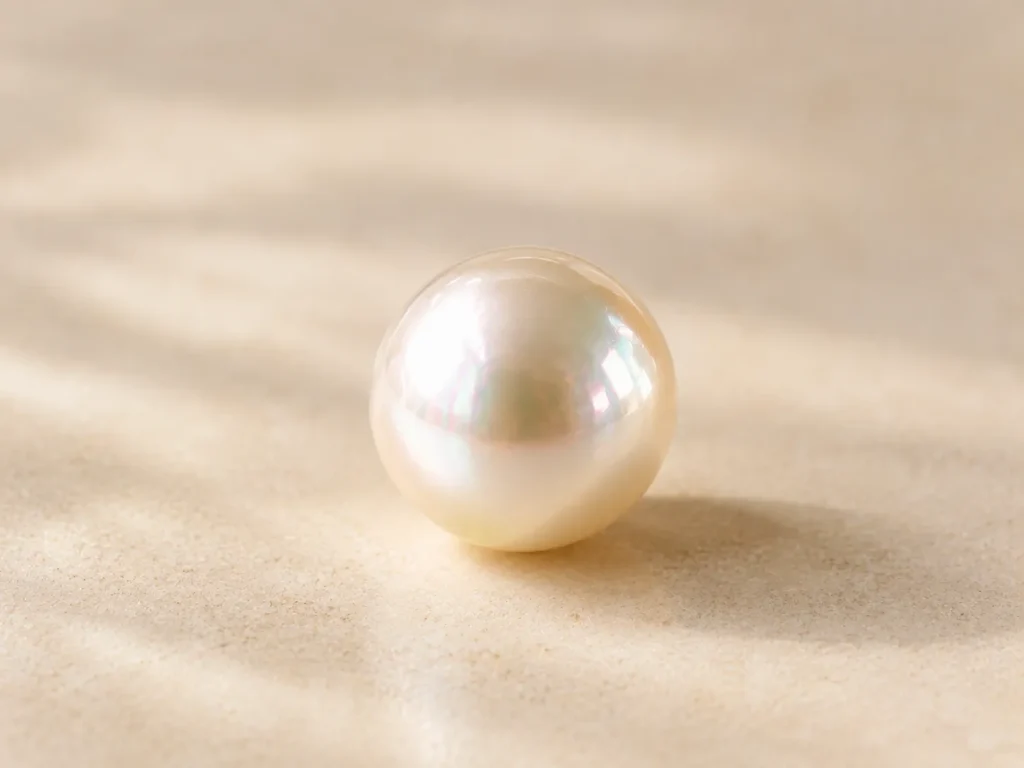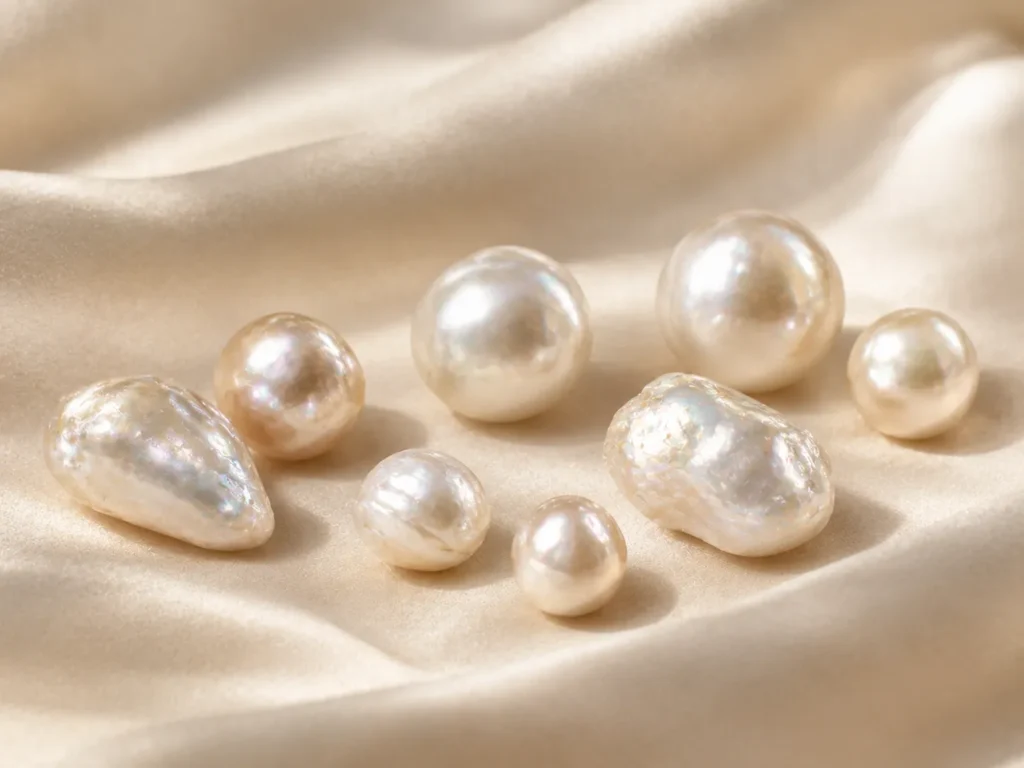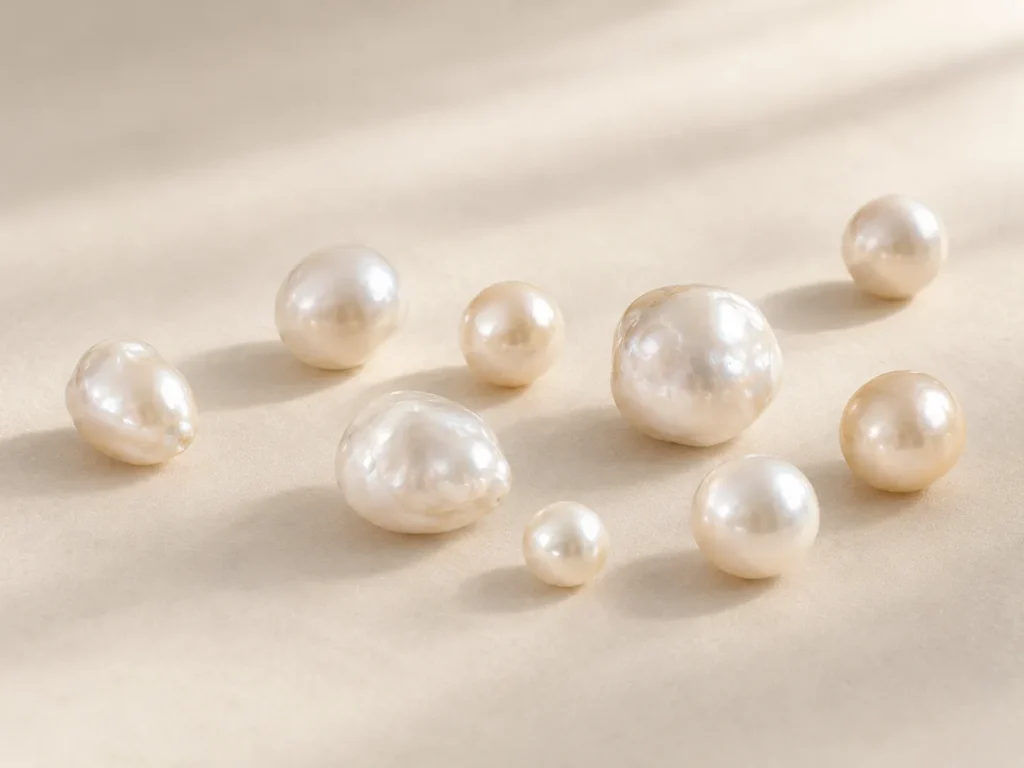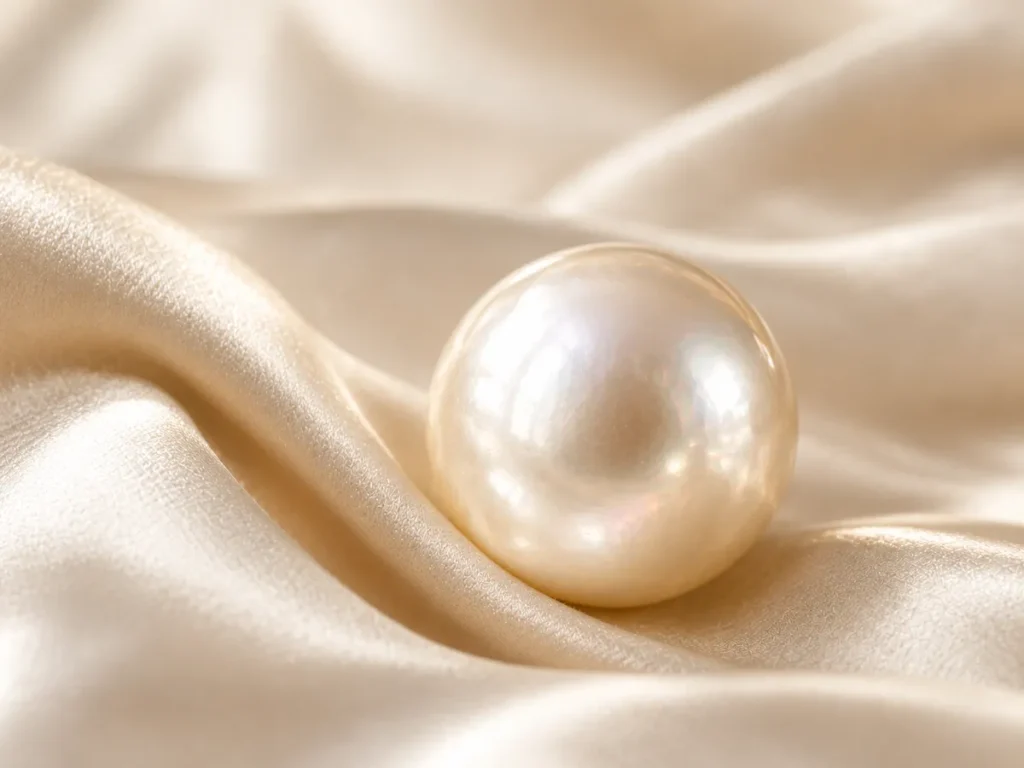
A pearl is one of the few gemstones that forms inside a living animal. It doesn’t need to be cut or polished from a piece of rock to reveal its beauty. Instead, a pearl develops gradually inside certain mollusks, building up layer after layer of a lustrous material called nacre.
That natural process is what makes pearls different from most other gems. It also explains why two pearls can look remarkably different, even when they come from the same type of mollusk.
Some pearls are perfectly round and bright white. Others have a soft golden glow, a pink or lavender tint, or a dark surface that shifts between green, silver, and purple as the light changes. Some are smooth and symmetrical, while others have irregular shapes that make each one distinctive.
But what exactly is a pearl? How does it form, and what separates a natural pearl from a cultured one?
Understanding these basics makes it easier to recognize the different types of pearls, appreciate their quality, and make more informed choices when buying pearl jewelry.
What Exactly Is a Pearl?
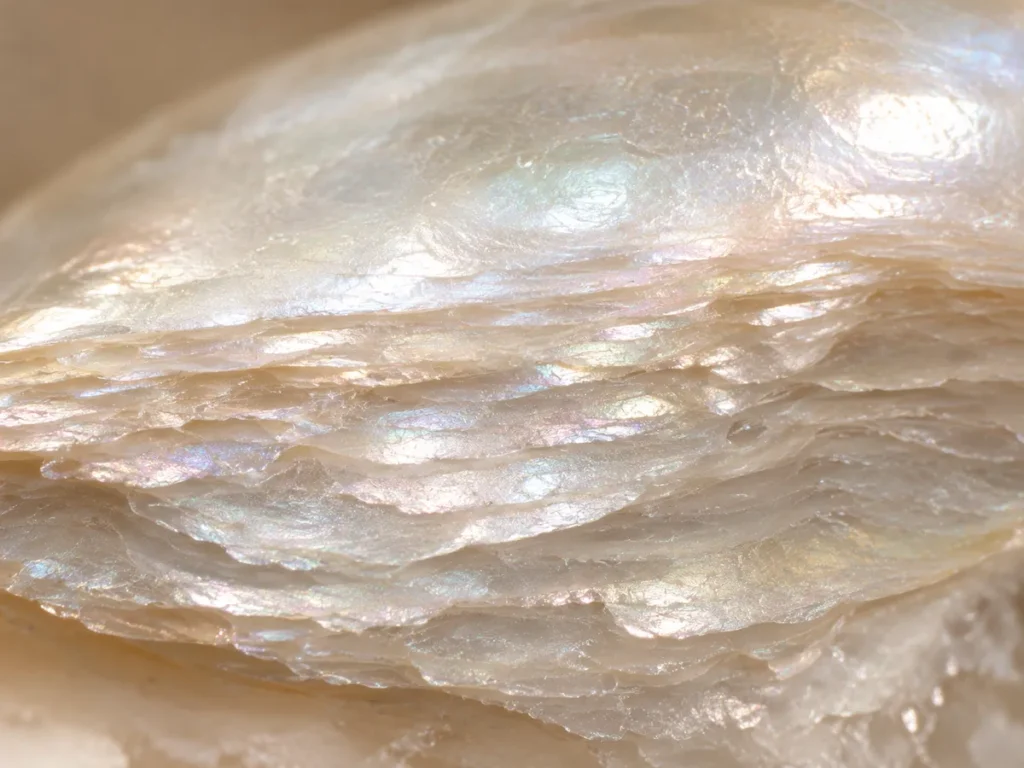
A pearl is an organic gem produced by certain mollusks, including pearl oysters and freshwater mussels. Unlike diamonds, sapphires, and other minerals that form through geological processes, pearls grow within living organisms.
Most pearls are made primarily of layers of nacre, a material composed largely of microscopic calcium carbonate crystals held together by an organic substance. Nacre is also known as mother-of-pearl and forms the iridescent inner lining of many mollusk shells.
As these layers accumulate, they create the pearl’s characteristic appearance. Light interacts with the layered structure of nacre, producing the soft glow, reflections, and subtle colors that make pearls so distinctive.
A pearl’s beauty depends on more than its color alone. Its luster, surface quality, shape, size, and the structure of its nacre all influence how it looks and how it is valued.
Pearls are therefore classified as organic gems. They are genuine gemstones, but their biological origin sets them apart from mineral gemstones.
How Does a Pearl Form?
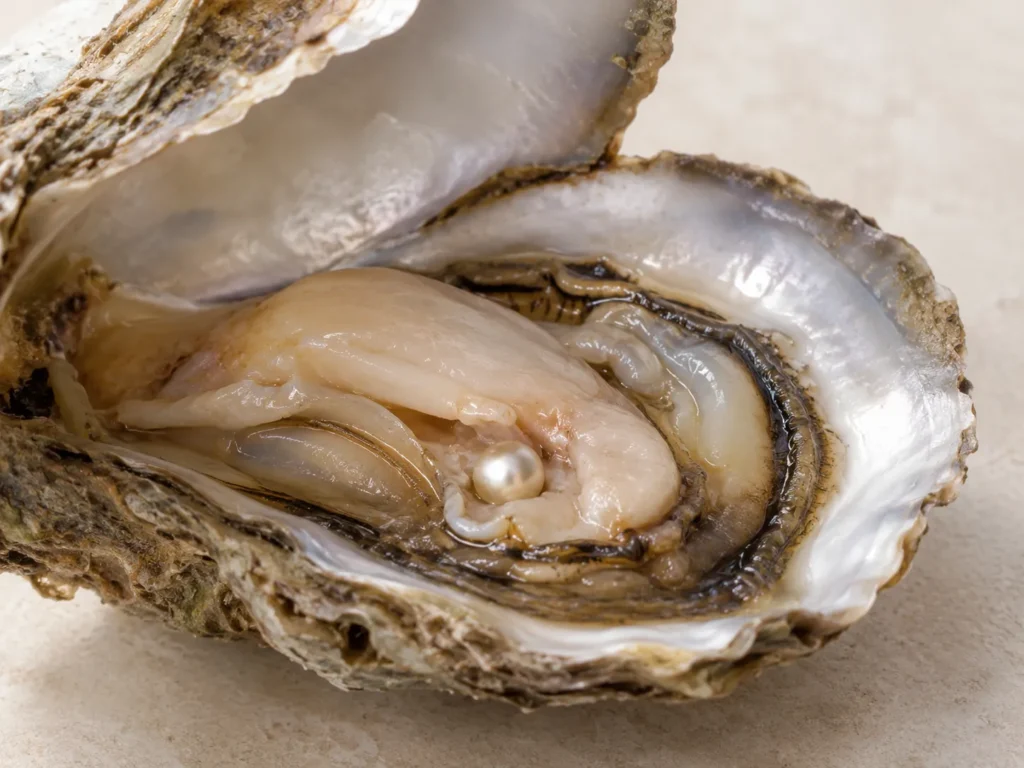
Pearls form when certain mollusks produce layers of mineral and organic material around a pearl-forming structure within their bodies.
The process is often described as a response to an irritant, but that explanation is an oversimplification. Natural pearl formation involves biological processes within the mollusk, and the exact circumstances vary.
When pearl-forming tissue becomes involved, specialized cells can begin depositing nacre around a small nucleus or other structure. Over time, successive layers build up, gradually developing into a pearl.
The process is slow, and the result is never entirely predictable. A pearl’s eventual size, shape, color, and surface characteristics depend on several factors, including the mollusk species, its environment, and the conditions under which the pearl grows.
Not every mollusk produces a pearl of jewelry quality. Even when a pearl forms, it may have an irregular shape, visible surface features, or a luster that is less appealing than that of a higher-quality example.
This natural variation is part of what makes pearls interesting. Each one reflects the conditions under which it developed.
For a closer look at the process, see our guide to How Are Pearls Formed?
Natural Pearls vs. Cultured Pearls
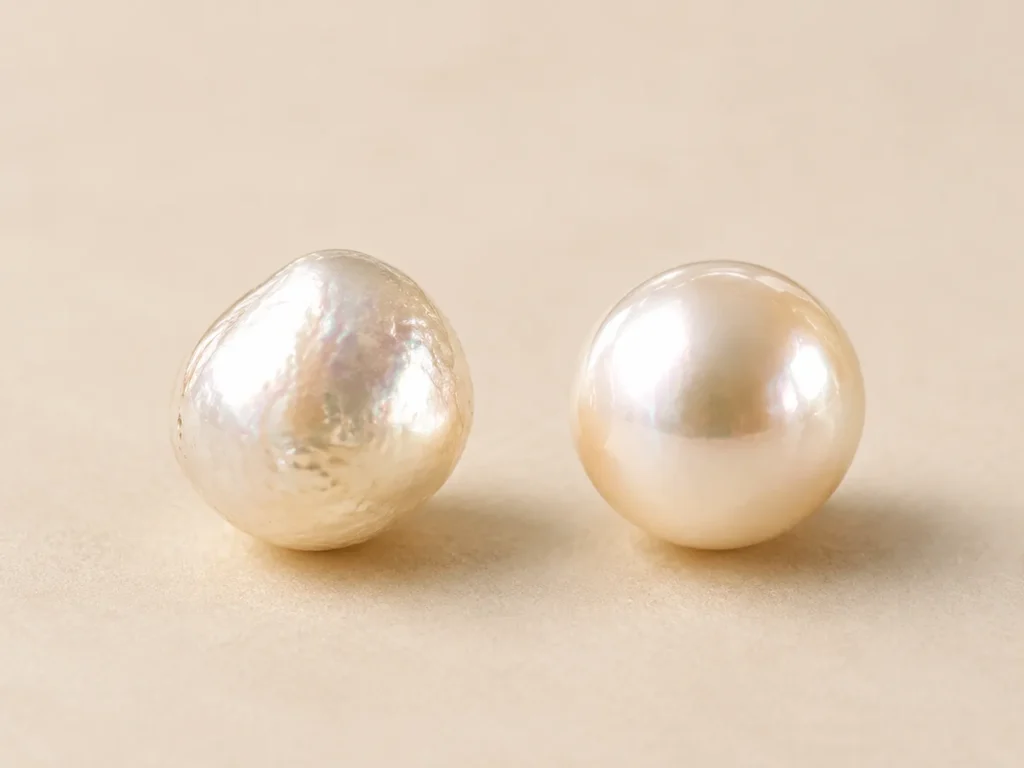
One of the most important distinctions in the pearl world is the difference between natural and cultured pearls.
Both are genuine pearls. The difference is how their formation begins.
Natural Pearls
Natural pearls form in the wild without deliberate human intervention. They develop through natural biological processes within a mollusk, without a pearl farmer intentionally initiating their growth.
Jewelry-quality natural pearls are rare. As a result, they can be highly valuable, particularly when they combine attractive luster, desirable shape, good surface quality, and a documented history or origin.
Many natural pearls encountered in the jewelry market today are antique or vintage pieces. When a pearl is described as natural, reliable documentation can be important, especially when its rarity is a significant part of the asking price.
Cultured Pearls
Cultured pearls are produced with human involvement. A pearl farmer initiates pearl formation by introducing a nucleus or donor tissue, depending on the cultivation method, into a suitable mollusk.
The mollusk then does the biological work of producing the pearl. It deposits nacre through its own natural processes while the pearl develops in the farming environment.
Cultured pearls are not imitation pearls. They are real pearls grown with human assistance.
Today, the vast majority of pearls sold in the jewelry market are cultured. Cultivation has made pearls available in a much wider range of sizes, colors, shapes, and price points than would be possible with natural pearls alone.
The distinction matters when comparing prices, evaluating claims about rarity, or deciding what type of pearl to buy. A cultured pearl can be exceptionally beautiful and valuable in its own right; natural origin does not automatically mean that every natural pearl is more attractive or better quality than every cultured pearl.
What Are the Main Types of Pearls?
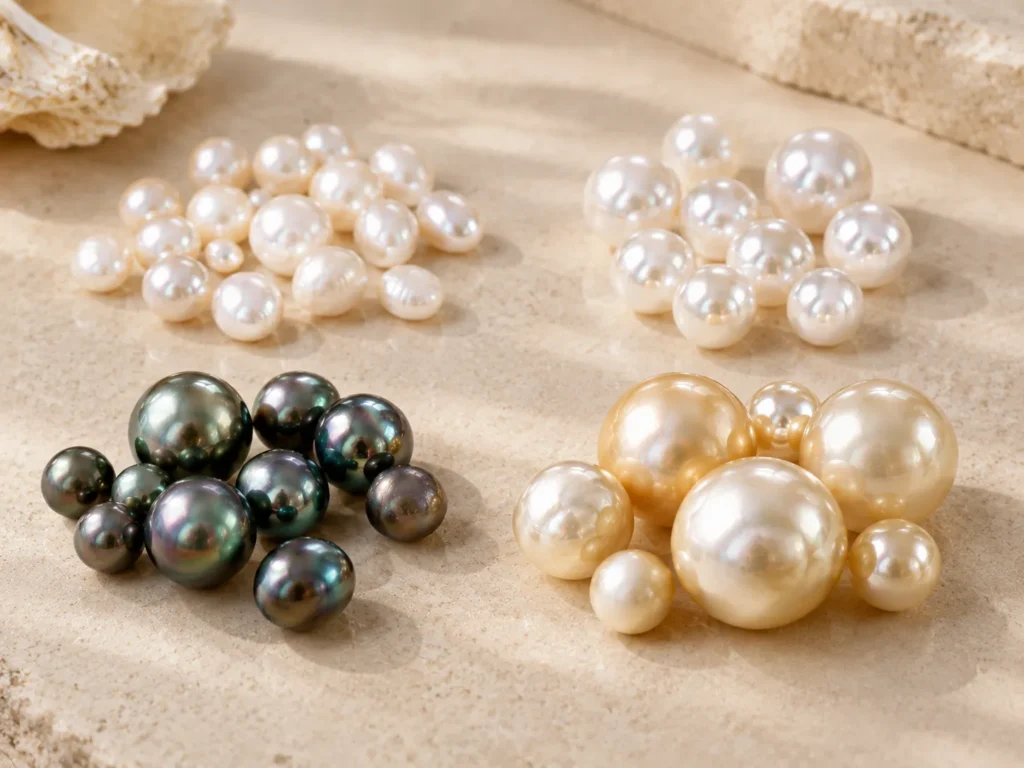
Pearls are commonly grouped according to the environment in which they grow, the mollusk that produces them, and their characteristic appearance.
For buyers, four major types of cultured pearls are especially important: freshwater, Akoya, Tahitian, and South Sea pearls.
Freshwater Pearls
Freshwater pearls are cultivated in freshwater mussels, mainly in lakes, rivers, and ponds. China is the leading source of freshwater cultured pearls.
They are known for their versatility. Depending on the variety and cultivation method, they can range from small, round white pearls to larger pearls in pink, peach, lavender, and other colors. Their shapes may be round, near-round, oval, or irregular.
Freshwater pearls are widely available at different price points, making them a popular choice for everyday jewelry and for buyers who want flexibility in color, shape, and budget.
Quality varies considerably, however. Some freshwater pearls have soft, subdued luster, while others display bright reflections and an impressive surface appearance.
Akoya Pearls
Akoya pearls are saltwater cultured pearls traditionally associated with classic white or cream pearl necklaces.
They are prized for their typically round shapes and crisp, reflective luster. Many white Akoya pearls also display subtle pink or other secondary hues that add depth to their appearance.
Akoya pearls are generally smaller than South Sea pearls and many Tahitian pearls. Their refined appearance and relatively uniform shapes make them particularly popular for traditional strands, stud earrings, and understated fine jewelry.
Although Japan is historically associated with Akoya pearl cultivation, Akoya pearls are also produced in other countries, including China.
Tahitian Pearls
Tahitian pearls are saltwater cultured pearls grown primarily in French Polynesia. They are produced by the black-lipped pearl oyster and are widely recognized for their naturally dark bodycolors.
Their colors can include charcoal, gray, silver, brown, and green, sometimes accompanied by striking overtones of blue, purple, or pink.
The term black pearl is often used to describe Tahitian pearls, but they are not all uniformly black. Their appeal often lies in the interplay between their main bodycolor and the secondary colors visible across the surface.
Tahitian pearls offer a distinctive alternative to classic white pearls, particularly for jewelry with a more dramatic or contemporary look.
South Sea Pearls
South Sea pearls are cultured in saltwater environments, particularly in Australia, Indonesia, and the Philippines. They are produced by the large silver-lipped or gold-lipped varieties of the Pinctada maxima oyster.
They are known for their relatively large size, substantial nacre, and soft, luxurious luster. Their colors range from white and silver to champagne and rich gold.
High-quality South Sea pearls can be costly because of their growing conditions, production characteristics, and limited availability in desirable combinations of size, shape, luster, and surface quality.
Their gentle glow differs from the sharper reflections often associated with Akoya pearls. Neither appearance is inherently better; the preferred look depends on the pearl’s quality and the wearer’s taste.
Each of these four pearl types has its own characteristics. For a more detailed comparison, explore our guide to Types of Pearls Explained.
Why Do Pearls Come in Different Colors?
Pearls occur in a wider range of colors than many people expect. White and cream are familiar choices, but pearls can also appear in pink, peach, lavender, gold, gray, green, and darker shades.
Several factors influence a pearl’s color, including the mollusk species, the structure and composition of its nacre, and the conditions in which it develops.
It is useful to distinguish between three related terms:
- Bodycolor: The pearl’s main overall color, such as white, cream, gray, or gold.
- Overtone: A secondary color that appears to float over the bodycolor, adding depth or warmth.
- Orient: An iridescent, rainbow-like effect that may appear across the surface of some pearls.
These effects can overlap. A pearl that appears white at first glance may reveal a pink overtone when viewed in different lighting. A dark Tahitian pearl may show green or purple hues as it moves.
Color alone does not determine quality or value. A pearl’s color should be considered alongside its luster, surface, shape, size, and the characteristics typical of its particular type.
Natural color and color treatment are also different matters. If color is an important part of a purchase, it is worth checking whether a seller has disclosed any treatments that may have altered the pearl’s appearance.
What Makes a Pearl Beautiful or Valuable?
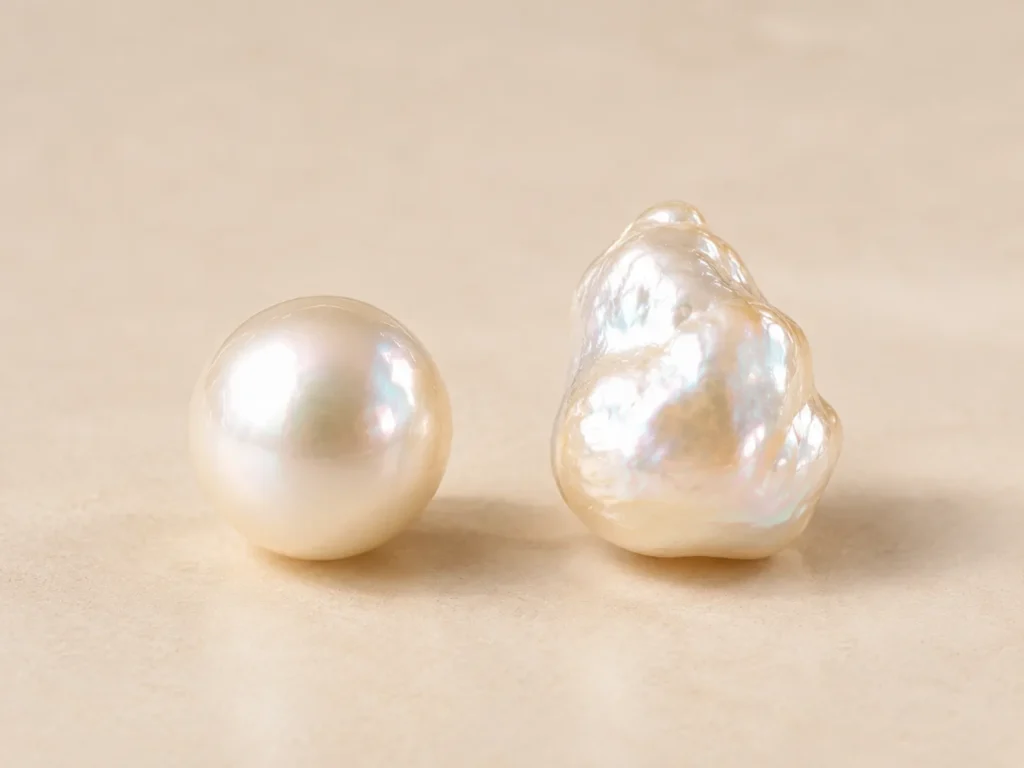
Not all pearls look the same, and not all pearls of the same size or color have the same value.
When evaluating pearls, professionals and informed buyers consider several characteristics together rather than relying on a single feature.
Luster describes the quality and intensity of light reflected from the pearl’s surface. Strong, well-defined reflections often make a pearl look bright and lively.
Surface quality refers to the presence, extent, and visibility of natural surface characteristics. Small blemishes do not automatically make a pearl unattractive, but their number, size, and position can influence its appearance and value.
Shape ranges from round and near-round to oval, drop-shaped, and baroque. Round pearls are traditionally sought after for classic strands, while unusual shapes can be desirable in contemporary jewelry.
Size is generally measured in millimeters. Larger pearls may be rarer and more expensive within a particular type and quality range, but size alone does not determine value.
Nacre quality matters because nacre contributes to a pearl’s appearance, durability, and characteristic luster. Its significance depends partly on the pearl type and how the pearl was cultured.
Color and matching also matter. In a necklace or pair of earrings, the consistency of color, luster, size, and shape can influence the overall appearance and value.
These factors work together. A large pearl with weak luster or a heavily blemished surface may be less desirable than a smaller pearl with stronger visual qualities.
There is no single characteristic that makes every pearl valuable. The right way to evaluate one is to consider its overall quality, type, intended use, and price.
For a more detailed explanation, see our guide to What Makes a Pearl High Quality?
Are Pearls Real Gemstones?
Yes. Pearls are genuine gemstones, specifically organic gems.
Traditional mineral gemstones such as diamonds and sapphires form through geological processes. Pearls, by contrast, develop within living mollusks.
Their biological origin does not make them less genuine. It simply means that their formation, structure, and care requirements differ from those of many mineral gems.
Pearls are also relatively delicate compared with many commonly worn gemstones. Nacre can be affected by abrasion, harsh chemicals, cosmetics, and unsuitable cleaning methods. Pearl jewelry therefore benefits from thoughtful handling and appropriate care.
Because pearls are organic gems, their beauty is best preserved by understanding the material rather than treating them exactly like diamonds or other hard mineral gemstones.
How Can You Tell Whether a Pearl Is Real?
A pearl’s appearance can provide useful clues, but visual inspection alone cannot always establish whether it is natural, cultured, or an imitation.
Real pearls often show subtle surface variations and a distinctive interaction with light. Imitation pearls may have a coating or surface finish that looks different under close examination. However, modern imitations can be convincing, and genuine pearls can also have very smooth surfaces.
The familiar suggestion to rub pearls against your teeth is not a reliable stand-alone test. It can be uncomfortable, may risk damage, and does not conclusively establish a pearl’s identity or origin.
If you are considering an expensive pearl, a qualified gemologist or an appropriate gemological report can provide more reliable evidence than a simple home test.
It is also important to distinguish between two separate questions:
- Is the object a genuine pearl or an imitation?
- If it is genuine, is it natural or cultured?
These are not the same question. Both natural and cultured pearls are real pearls, while imitation pearls are made from other materials to resemble them.
Our guide to How to Tell If Pearls Are Real explores the differences in greater detail.
How Should You Choose Your First Pearl?
If you are new to pearls, you do not need to memorize every technical term before making a decision. Start with how you intend to wear the jewelry, the appearance you prefer, and the amount you are comfortable spending.
For a classic, polished look, you might consider a white Akoya pearl strand or a pair of pearl studs. If you prefer variety and a more flexible budget, freshwater pearls offer a broad selection of shapes and colors. Tahitian pearls are worth exploring if you like darker colors and distinctive overtones, while South Sea pearls may appeal to you if you prefer larger pearls with a soft, luminous glow.
Once you have identified a type you like, compare individual pearls for luster, surface quality, shape, size, and color. For necklaces and earrings, pay attention to how well the pearls match one another.
Ask the seller to state clearly whether the pearls are natural or cultured and whether any treatments have been applied. For higher-value purchases, look for appropriate documentation and make sure the description accurately represents the pearl being sold.
Most importantly, do not assume that the most expensive pearl is automatically the right one for you. A well-chosen pearl should suit your taste, your intended use, and your budget.
Frequently Asked Questions
Are all pearls made by oysters?
No. Pearls can form in different types of mollusks, including saltwater pearl oysters and freshwater mussels. The species involved depends on the type of pearl.
Are cultured pearls real pearls?
Yes. Cultured pearls are genuine pearls. Human intervention initiates their formation, but the mollusk produces the pearl through its own biological processes.
Are freshwater pearls real?
Yes. Freshwater pearls are genuine pearls cultivated in freshwater mussels. They are not imitations simply because they are often more affordable than certain saltwater pearls.
Why are some pearls more expensive than others?
Price depends on a combination of factors, including pearl type, size, luster, surface quality, shape, color, matching, and supply. Natural origin and supporting documentation can also influence value.
Do real pearls always have a perfectly round shape?
No. Genuine pearls can be round, near-round, oval, drop-shaped, or baroque. Shape varies naturally, and an irregular pearl is not necessarily a sign of poor quality or imitation.
Can pearls lose their luster?
Yes. Exposure to unsuitable chemicals, abrasion, cosmetics, and improper care can affect a pearl’s surface and appearance. Gentle handling and appropriate storage help preserve its luster.
Final Thoughts
A pearl is more than a smooth, shining object. It is an organic gem shaped by a living mollusk, its environment, and the gradual formation of nacre.
Understanding the difference between natural and cultured pearls, learning how the main pearl types compare, and recognizing the features that influence quality provide a useful foundation for anyone interested in pearl jewelry.
From versatile freshwater pearls to classic Akoya, dark Tahitian, and luminous South Sea pearls, each type offers a different combination of color, luster, shape, and character.
Once you understand what a pearl is and how it forms, the next step is learning how the different types compare—and how to recognize quality when choosing one.