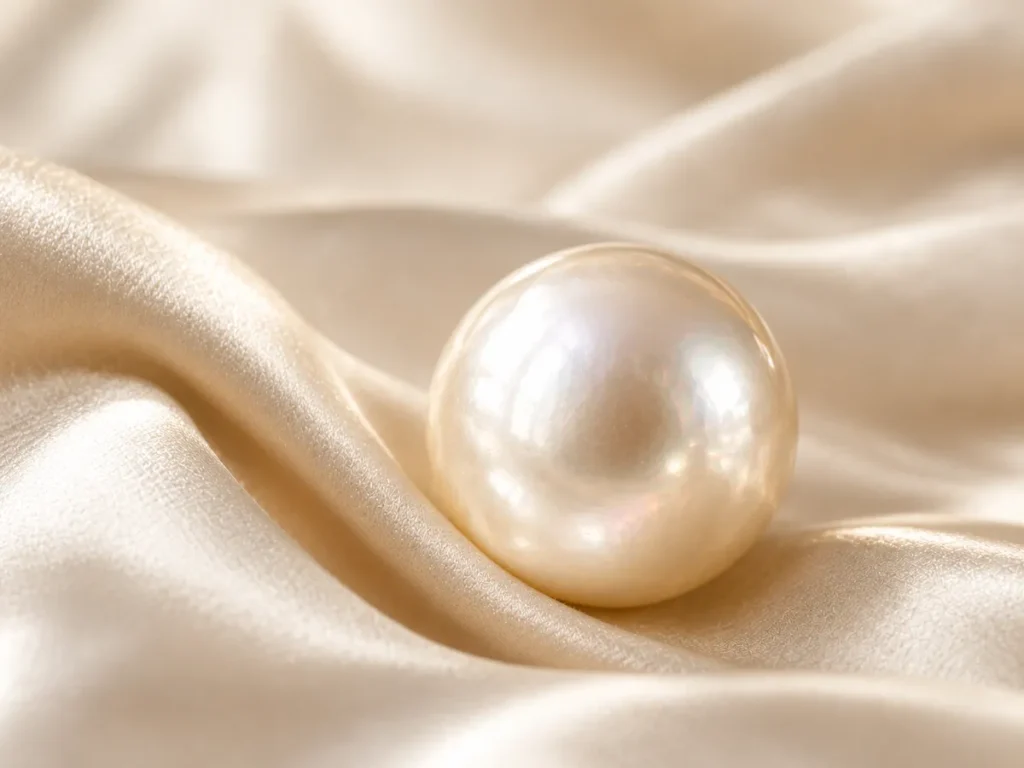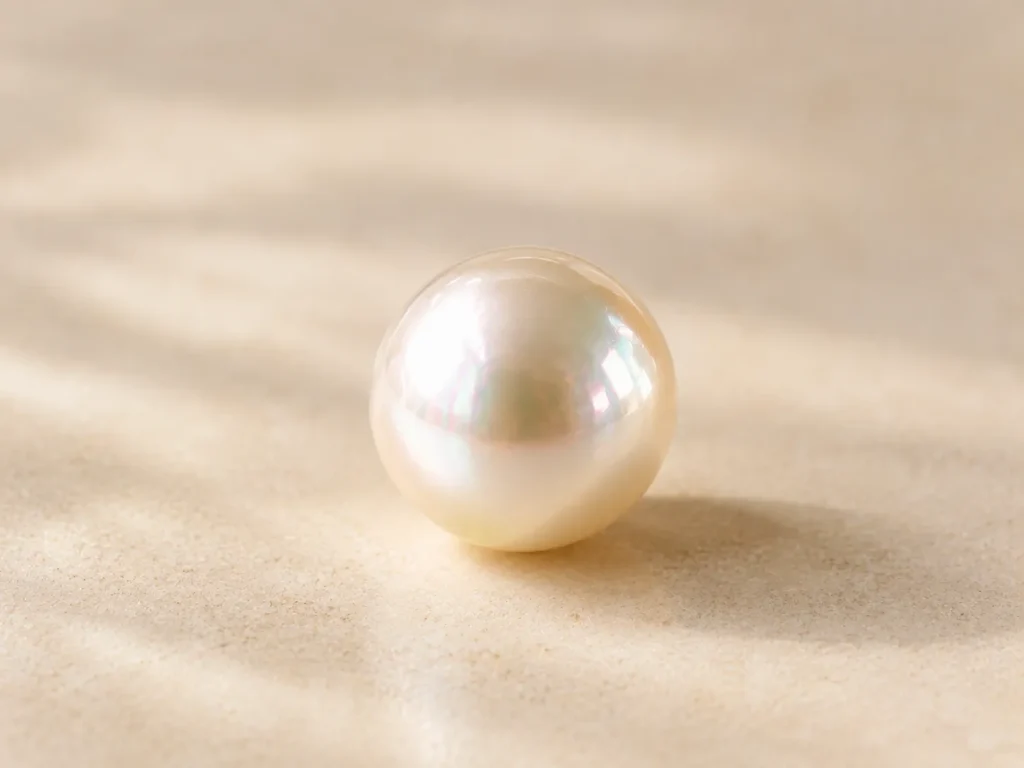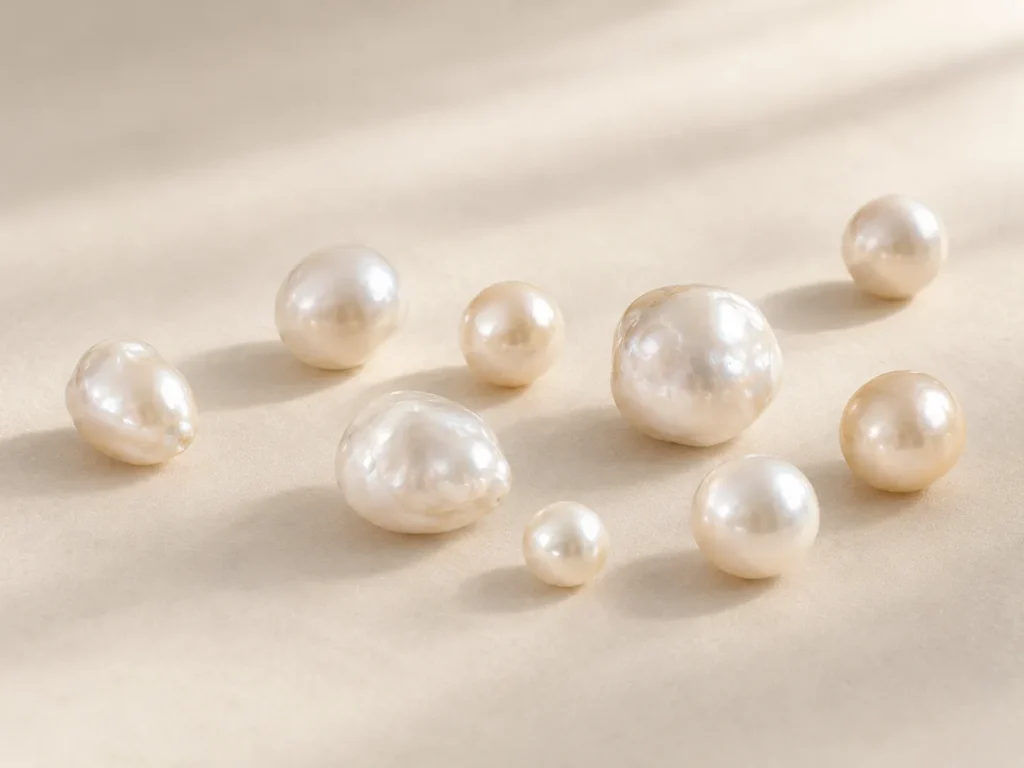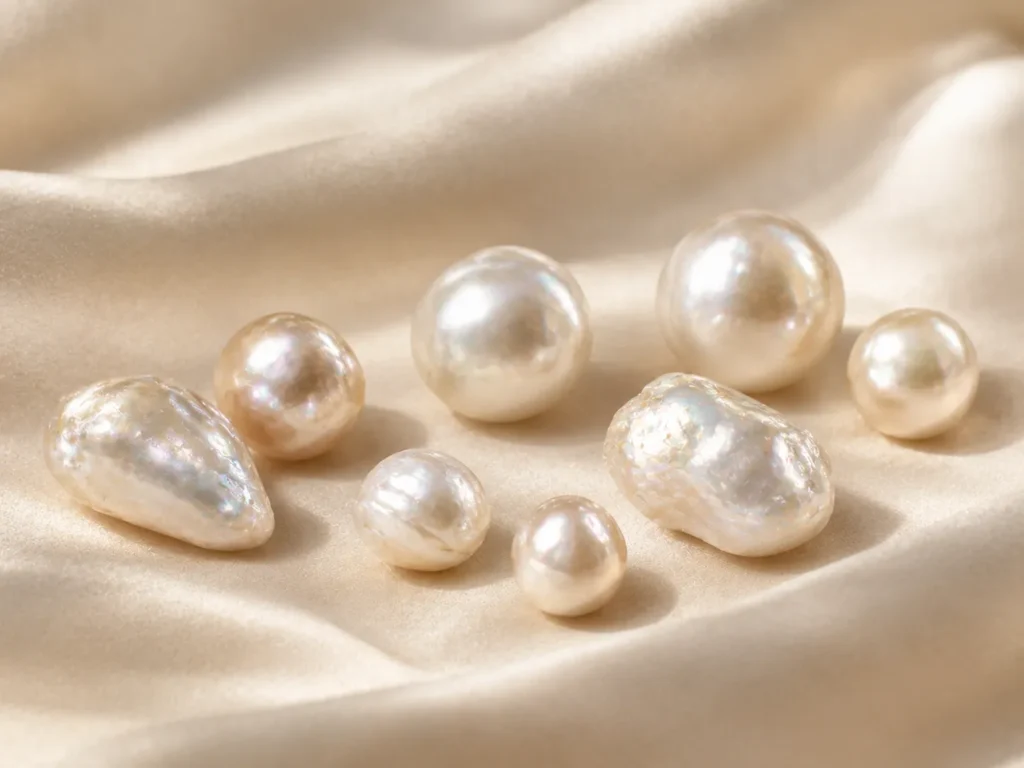
A pearl can look luminous, feel substantial in the hand, and carry a price that seems surprisingly high—or unexpectedly accessible. Yet one important detail can change how a pearl is understood and valued: whether it formed naturally in the wild or was cultivated with human assistance.
The difference between natural and cultured pearls is often misunderstood. Some people assume cultured pearls are imitation gems. Others believe natural pearls are always perfectly round, while cultured pearls are somehow less authentic. Neither assumption is correct.
Both natural and cultured pearls form inside living mollusks. If you are new to pearls, start with our guide to what a pearl is before exploring the key differences between the two. That distinction affects rarity, availability, and often price, but it does not automatically determine the beauty or quality of an individual pearl.
If you are comparing pearl jewelry or simply want to understand what makes these gems special, here is what you need to know.
What Is the Difference Between Natural and Cultured Pearls?
The simplest distinction is human involvement.
Natural pearls form without deliberate human intervention. A pearl develops inside a mollusk in the wild through a biological process that occurs without a person intentionally initiating its growth.
Cultured pearls form after people deliberately initiate pearl growth. A pearl farmer or technician introduces mantle tissue, sometimes together with a shell bead, into a suitable mollusk. The animal then produces the material that gradually builds the pearl.
In both cases, the mollusk does the actual work of forming the pearl. Cultured pearls are genuine pearls, not plastic or glass imitations.
Today, most pearls available in the jewelry market are cultured. Natural pearls are much rarer, and many natural pearls encountered in the market today come from older jewelry or historical collections.
Natural Pearls: Formed Without Human Intervention
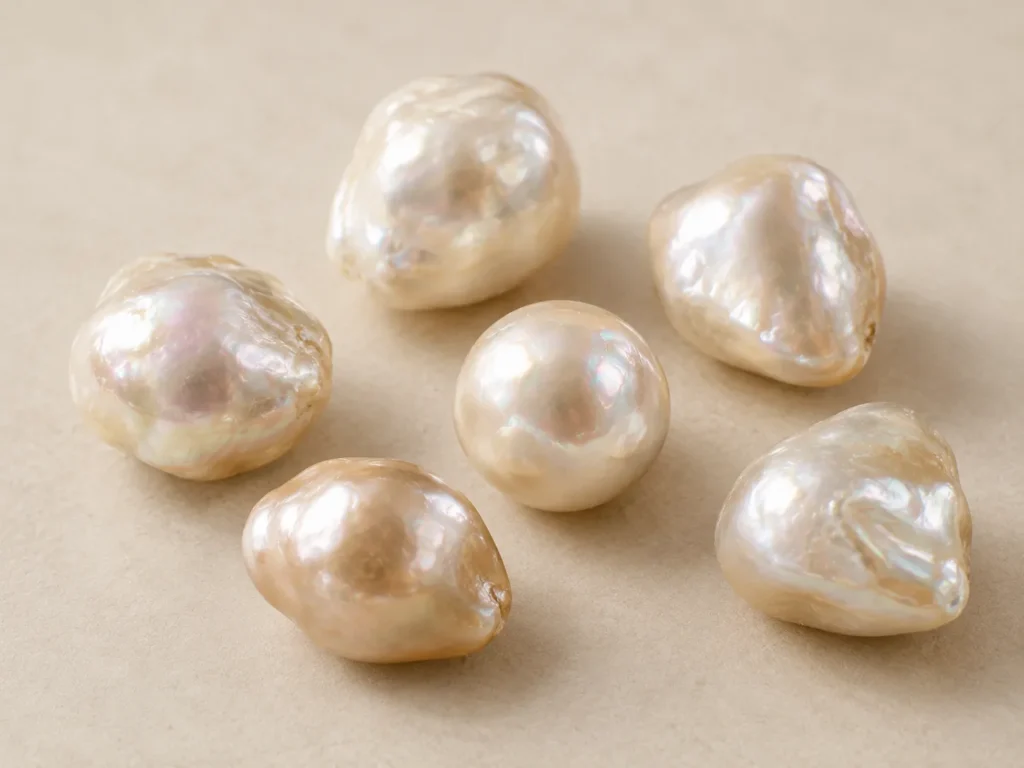
Natural pearls begin forming without a deliberate human procedure. Within certain mollusks, a biological disturbance can lead to the development of pearl-forming tissue. That tissue produces layers of material that gradually build a pearl.
The process is unpredictable. A mollusk may never produce a pearl, and even when one forms, it may not have the size, shape, surface quality, or luster needed for fine jewelry.
This uncertainty is a major reason natural pearls are rare. Finding one suitable for jewelry involves far more than simply opening a shell and discovering a gem.
Natural pearls can vary considerably in appearance. Some are round or near-round; others are oval, drop-shaped, or irregular. Their colors and luster also depend on the mollusk and the conditions in which they formed.
Because natural pearls are uncommon, verified examples can command substantial prices, particularly when they have excellent quality, desirable characteristics, or an important history. However, not every natural pearl is exceptionally valuable. Its individual characteristics still matter.
Cultured Pearls: Genuine Pearls Grown With Human Assistance
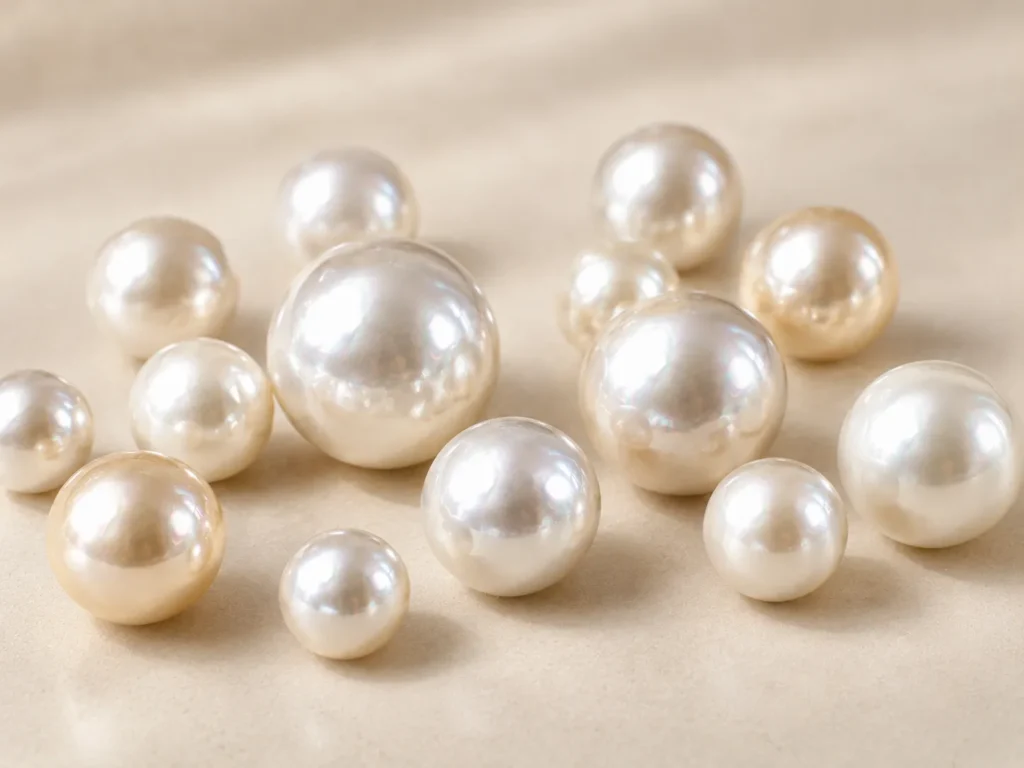
Cultured pearls are produced through managed pearl farming. Instead of waiting for pearl formation to begin by chance, technicians deliberately initiate the process inside a host mollusk.
The method varies by pearl type. In many bead-cultured pearls, a shell bead is introduced together with a small piece of mantle tissue. In tissue-nucleated methods, mantle tissue is introduced without a solid bead nucleus. The tissue develops into a pearl sac, whose cells produce the material that forms the pearl.
Once the process has begun, the mollusk continues to build the pearl through its own biological activity. Layers of nacre accumulate over time, giving the pearl its structure and appearance.
Cultivation makes pearl production more practical and predictable than relying on natural formation alone, although the final result is never completely guaranteed. Pearls still vary in size, shape, color, luster, and surface quality, and some will not meet commercial standards.
Cultured pearls include freshwater pearls, Akoya pearls, Tahitian pearls, and South Sea pearls. These varieties differ in their producing mollusks, growing environments, cultivation methods, and typical characteristics.
The word cultured describes how a pearl began to form. It does not mean the pearl is artificial.
To understand the biology behind both types, read our guide to how pearls are formed, which explains how pearl-forming tissue develops and how layers of nacre build a pearl.
Natural Pearls vs. Cultured Pearls at a Glance
| Feature | Natural Pearls | Cultured Pearls |
|---|---|---|
| How they begin | Form without deliberate human intervention | Growth is deliberately initiated by people |
| Where they grow | Inside wild mollusks | Inside mollusks in managed cultivation, usually pearl farms |
| Pearl material | Produced by the mollusk | Produced by the mollusk |
| Availability | Rare | Widely available |
| Price | Can be very high, depending on rarity, quality, and provenance | Ranges from accessible to very expensive, depending on type and quality |
| Appearance | Can be round, irregular, or varied in color | Can also be round, irregular, and varied in color |
| Identification | Often requires professional examination | Can be confirmed through appropriate gemological testing |
The most important point is that appearance alone does not reliably separate the two. A fine cultured pearl may be more attractive than a low-quality natural pearl, while a rare, high-quality natural pearl may have exceptional historical and market value.
Are Cultured Pearls Real Pearls?
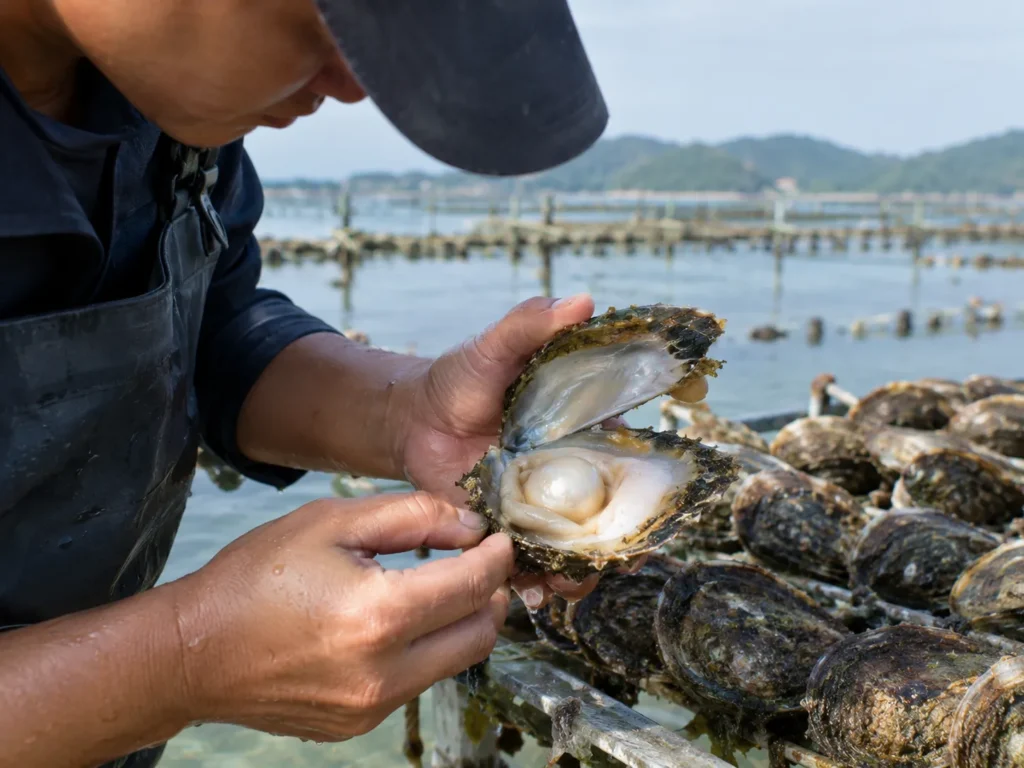
Yes. Cultured pearls are real pearls because they grow inside living mollusks and are formed from materials produced by the animals themselves.
The confusion often comes from the assumption that anything involving human intervention must be artificial. In pearl cultivation, however, people initiate the process rather than manufacture the finished pearl.
A cultured pearl is not equivalent to a glass bead coated to imitate nacre. Imitation pearls are manufactured products designed to resemble pearls, whereas cultured pearls are biological gems.
This distinction matters when shopping. Terms such as natural, cultured, and imitation describe different things and should not be used interchangeably.
A seller who describes a pearl as “natural” simply because it was formed by a living mollusk may create a misleading impression. In gemological usage, a natural pearl is one that formed without human intervention. If people deliberately initiated its growth, it should be identified as cultured.
Why Are Natural Pearls So Rare?
Natural pearl formation is an uncommon and unpredictable event. It is not a routine outcome every time a mollusk grows or encounters a biological disturbance.
Even when a natural pearl forms, it may be too small, irregular, damaged, or otherwise unsuitable for fine jewelry. The number of natural pearls that meet desirable quality standards is therefore limited.
Cultured pearl farming changed the availability of pearls by allowing producers to initiate growth in selected mollusks and manage the growing environment. It did not make every pearl identical, nor did it remove the uncertainty of cultivation, but it made pearls available to a much wider range of buyers.
Natural pearls remain desirable for their rarity and, in some cases, their historical significance. Antique natural pearl jewelry may also carry value connected to its craftsmanship, documented ownership, or provenance.
Still, rarity alone does not tell the whole story. A natural pearl’s value depends on its individual qualities and the market in which it is sold.
Natural Pearls vs. Cultured Pearls: Which Is More Expensive?
Natural pearls are often more expensive than cultured pearls because they are much rarer. This is especially true for natural pearls with attractive luster, desirable shapes, good surface quality, and credible documentation of their identity.
But it would be misleading to say that every natural pearl is worth more than every cultured pearl.
Cultured pearl prices cover a broad range. A well-matched strand of high-quality South Sea pearls, for example, can be a significant luxury purchase. Excellent Akoya pearls and exceptional freshwater pearls can also command strong prices.
When comparing pearls, consider the following factors:
- Pearl type: Freshwater, Akoya, Tahitian, and South Sea pearls occupy different market segments.
- Size: Larger pearls are generally rarer within a given type, although size should not be considered in isolation.
- Luster: Bright, sharp reflections can make a pearl appear more vivid and refined.
- Surface quality: Fewer or less noticeable blemishes can improve a pearl’s appearance.
- Shape and color: Certain combinations are more sought after, depending on the pearl type and market preferences.
- Nacre quality: The quality and thickness of nacre matter for appearance and, in cultured pearls, can also affect durability.
- Matching: For necklaces and other pieces containing multiple pearls, consistency in size, color, luster, and shape can affect value.
- Documentation and provenance: For a pearl represented as natural, credible gemological evidence is particularly important.
The better question is not simply whether natural or cultured pearls are more expensive. It is whether the price is reasonable for the specific pearl’s identity, quality, and supporting documentation.
Can You Tell Natural and Cultured Pearls Apart by Looking?
Usually, not with confidence.
Natural and cultured pearls can look remarkably similar. Both may have excellent luster, smooth surfaces, attractive colors, and round shapes. Conversely, both can have irregular shapes or visible surface characteristics.
A pearl’s roundness does not prove it is cultured, and an irregular shape does not prove it is natural. Color and luster are not reliable proof of origin either.
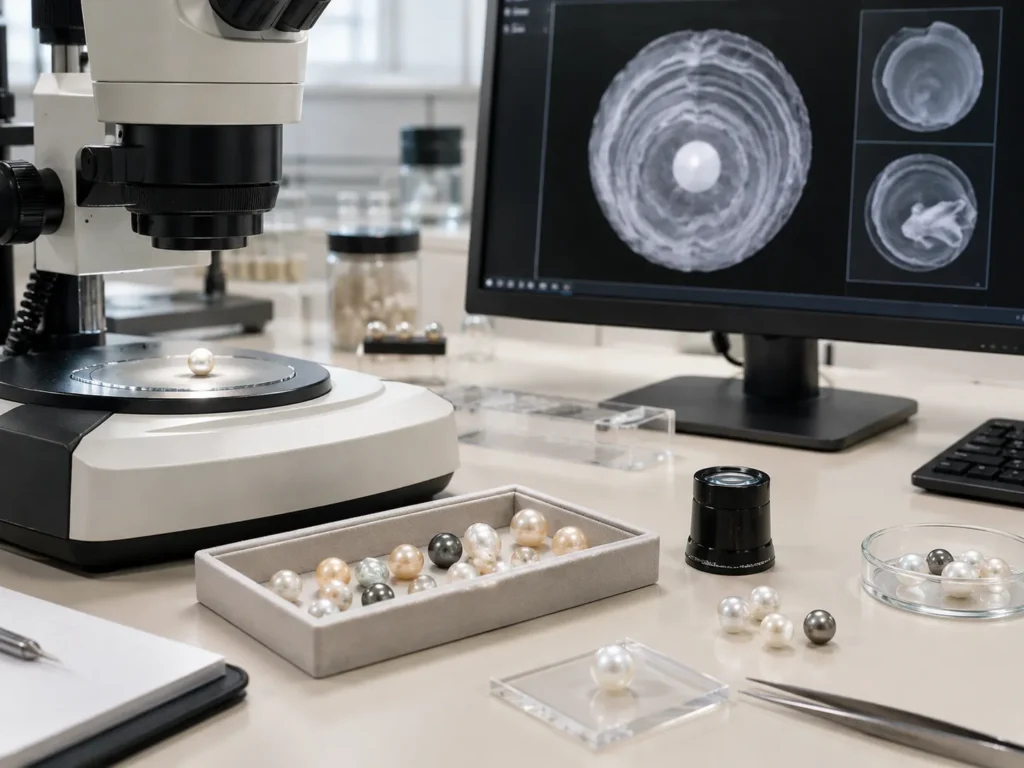
Professionals may examine a pearl’s surface and other visible characteristics, but reliable identification often requires looking inside the pearl. Gemological laboratories use X-ray radiography and, when appropriate, other analytical techniques to examine internal growth structures.
In bead-cultured pearls, imaging may reveal a central bead nucleus surrounded by nacre. Natural pearls generally show different growth structures, although interpretation can be complex and not every pearl follows a simple textbook pattern.
If you are buying a valuable pearl represented as natural, ask for an appropriate report from a reputable gemological laboratory. The report should identify whether the pearl is natural or cultured, rather than merely describe its color or appearance.
A seller’s description, a photograph, or a home test should not be treated as conclusive proof.
Which Should You Buy: Natural or Cultured Pearls?
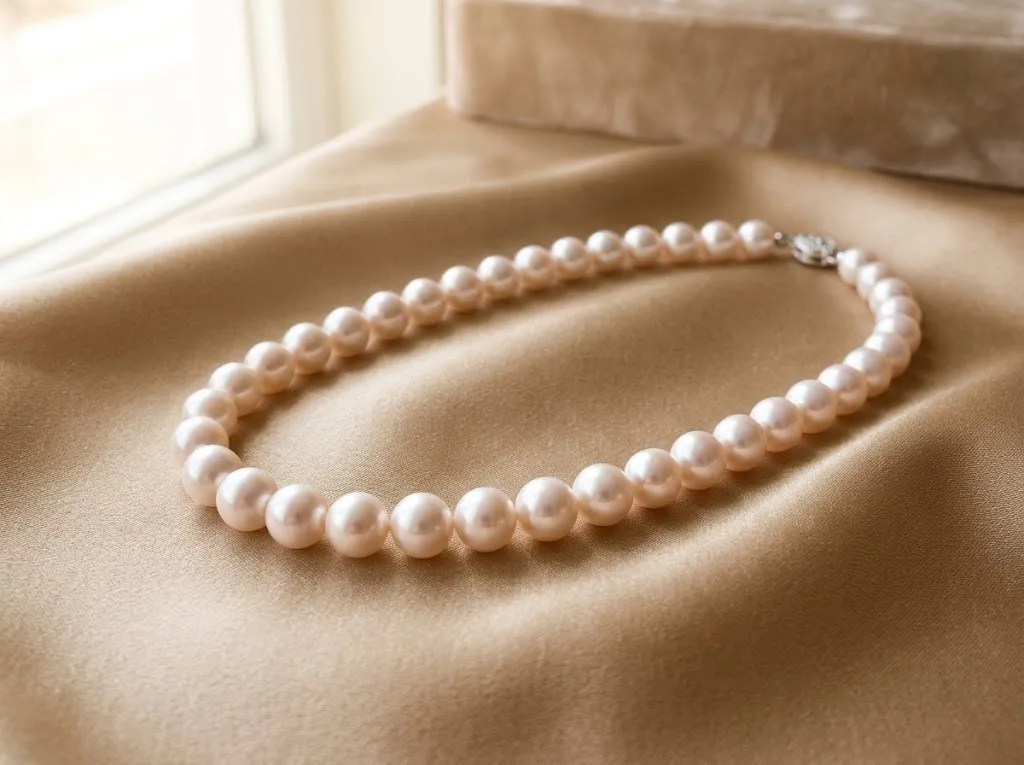
For most people shopping for pearl jewelry, cultured pearls are the practical starting point. They offer a wide choice of pearl types, sizes, colors, shapes, and price ranges, making it easier to find something suited to personal taste and budget.
If you love classic white pearls, Akoya pearls may be worth exploring. If you prefer larger pearls with warm white or golden tones, South Sea pearls offer distinctive options. To compare the main varieties in more detail, explore our guide to the different types of pearls, including freshwater, Akoya, Tahitian, and South Sea pearls. Tahitian pearls are known for their varied dark body colors, while freshwater pearls provide considerable diversity in shape and color.
Natural pearls appeal to a different set of priorities. Their rarity, history, and documented origin can be especially meaningful to collectors and buyers interested in antique jewelry. Because natural pearls are uncommon and can be expensive, careful verification is essential.
Before deciding, think about what matters most to you:
- For everyday wear: Focus on appearance, durability, comfort, and a budget that feels reasonable.
- For a special gift: Consider the recipient’s preferred pearl type, color, and style rather than assuming the rarest option is automatically best.
- For a luxury purchase: Compare quality carefully and ask for clear product information.
- For a natural pearl or antique piece: Pay particular attention to documentation, provenance, and independent identification.
There is no universal winner. The right choice depends on what you value in a pearl and what you expect from the purchase.
How to Buy Pearls With Confidence
Whether you choose natural or cultured pearls, the same basic buying principles apply.
First, make sure the seller clearly identifies the pearl. If it is cultured, the description should say so. If it is claimed to be natural, ask what evidence supports that claim.
Second, evaluate the pearl itself. Look at the luster, surface, shape, color, and size. For necklaces and other multi-pearl pieces, check how well the pearls match. For cultured pearls, ask about nacre quality where relevant.
Third, consider the price in context. Compare pearls of the same general type and similar quality rather than comparing a low-grade freshwater pearl with an exceptional natural pearl and assuming the price difference is explained by origin alone.
Finally, seek independent gemological documentation when the value or claimed rarity justifies it. A reputable report can help establish pearl identity and reduce uncertainty, particularly when a seller is asking a premium for a natural pearl.
Clear descriptions and credible evidence are more useful than dramatic claims about rarity.
Before making a purchase, read our pearl buying guide for practical advice on evaluating pearl quality, comparing prices, and choosing pearls that suit your budget.
Final Thoughts
The difference between natural and cultured pearls begins with how pearl formation is initiated. Natural pearls develop without deliberate human intervention, while cultured pearls grow after people initiate the process inside a mollusk. Both are genuine pearls formed through biological activity.
Natural pearls are rare, and exceptional examples can be highly valuable. Cultured pearls, meanwhile, have made the beauty of pearls more accessible while offering an extraordinary range of types and qualities.
Neither label alone determines whether a pearl is beautiful, well made, or worth its asking price. Understanding the pearl’s origin, examining its quality, and checking its documentation when necessary will help you make a more informed choice.
If you are just beginning to explore pearls, continue with our guide to how pearls are formed and learn more about the differences between freshwater, Akoya, Tahitian, and South Sea pearls.
Frequently Asked Questions
Are natural pearls better than cultured pearls?
Not necessarily. Natural pearls are much rarer, but rarity does not automatically make an individual pearl more beautiful or better in quality. Luster, surface condition, shape, color, size, and other factors all matter.
Are cultured pearls considered fake?
No. Cultured pearls are genuine pearls formed inside living mollusks. They are different from imitation pearls made from materials such as glass or plastic.
Why do natural pearls cost more?
Natural pearls are rare because their formation occurs without deliberate human intervention and is unpredictable. High-quality examples with credible identification or important provenance can command high prices.
Can natural and cultured pearls look identical?
They can look very similar. Appearance alone usually cannot establish whether a pearl is natural or cultured. Professional gemological examination may be needed.
Are freshwater pearls natural or cultured?
Most freshwater pearls sold in today’s jewelry market are cultured. Freshwater describes the environment in which the pearl forms, while natural or cultured describes whether humans deliberately initiated the process.
What should I ask before buying a natural pearl?
Ask whether the pearl has been independently identified as natural, whether a gemological report is available, and whether any claimed history or provenance is documented. For a significant purchase, seek independent verification rather than relying only on a seller’s description.
At PearlVerity, our goal is to make pearl knowledge clearer and more useful, so you can appreciate the differences between pearls and choose with greater confidence.