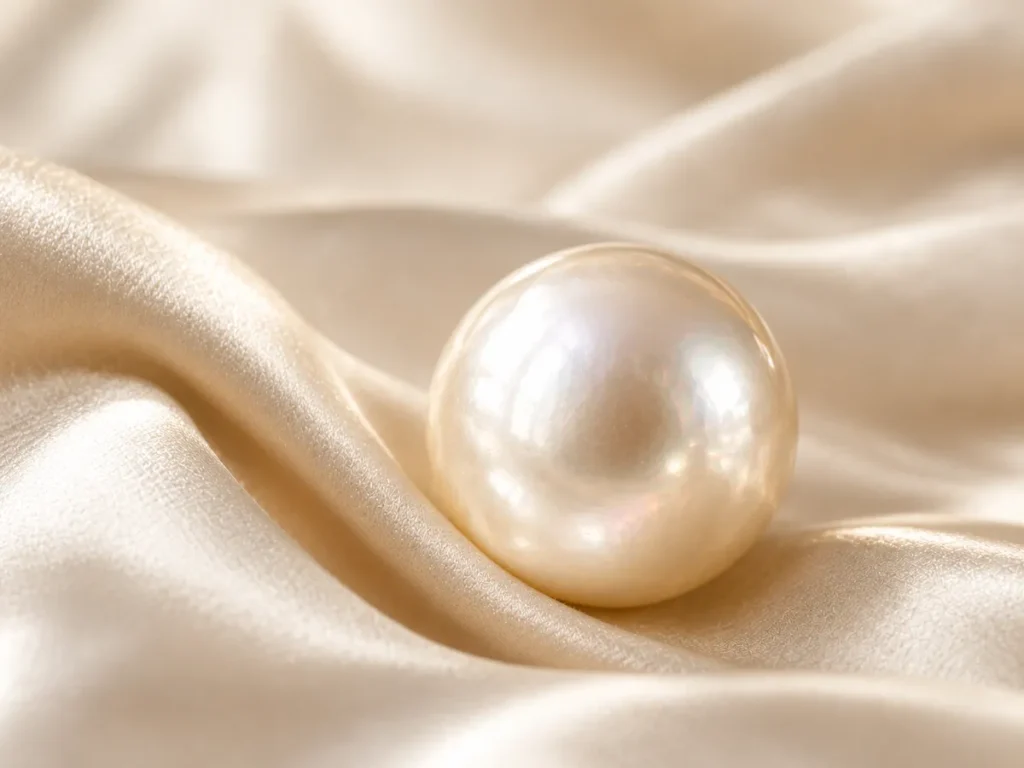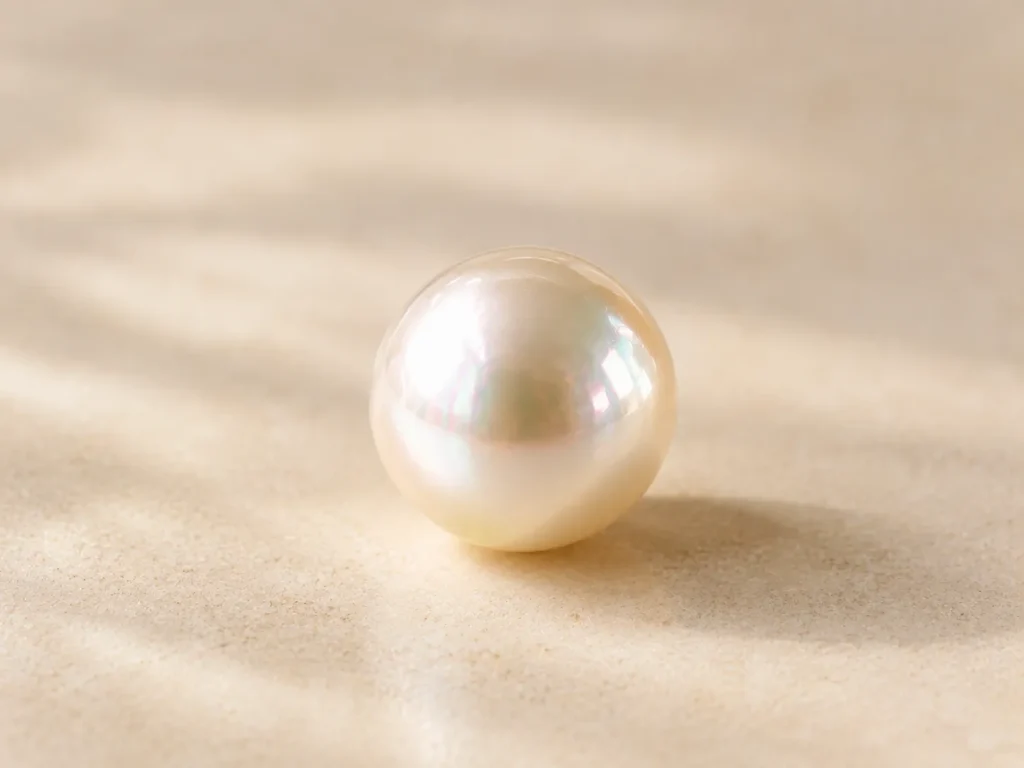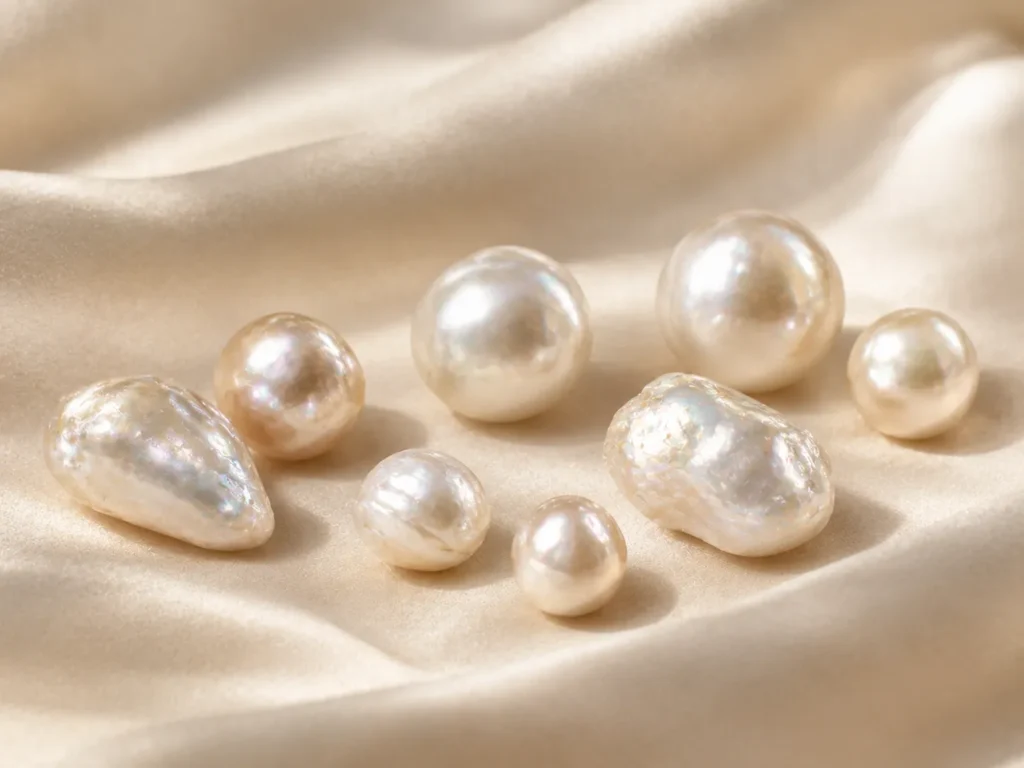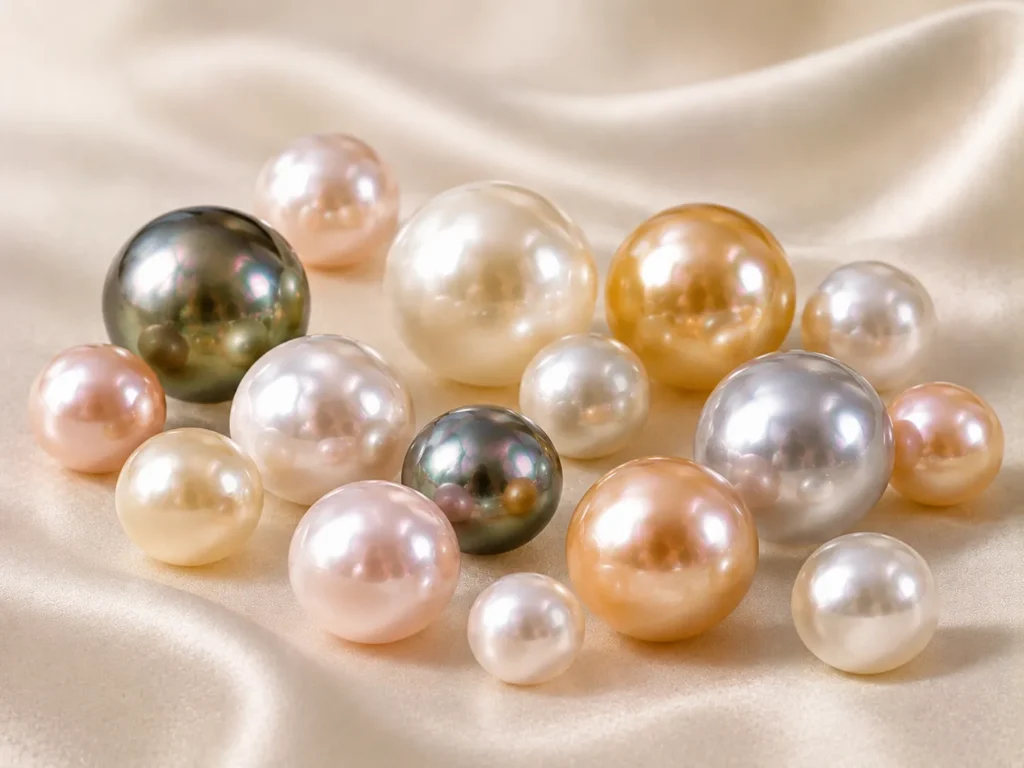
Pearls are often associated with classic white, but their natural colors extend far beyond it. Depending on the type of pearl, they can appear cream, pink, silver, gold, gray, green, blue, or even deep shades of black. Some display subtle secondary colors that seem to shift as the pearl catches the light.
So, why do pearls have different colors?
Pearl color is influenced by several factors, including the species of mollusk that produces the pearl, its biological characteristics, the structure of the nacre, and the conditions in which the pearl develops. The interaction of these elements creates the wide variety of colors seen in pearls today.
Understanding pearl color also means looking beyond the main color of a pearl. Its overtone, surface appearance, and luster all contribute to how the color is perceived. These details help explain why two pearls that appear to be the same color at first glance can look remarkably different in person.
Why Do Pearls Have Different Colors?
Pearls develop inside living mollusks, and their color is shaped by a combination of biological and structural factors.
One important influence is the type of mollusk. Different pearl-producing species have different biological characteristics and are associated with different ranges of pearl colors. This is one reason white and cream Akoya pearls look different from the dark, colorful pearls commonly associated with Tahitian pearl oysters.
Other influences include pigments and the microscopic structure of the pearl’s layers. The composition and arrangement of nacre affect how light interacts with the pearl, contributing to its visible color and subtle optical effects.
Growing conditions may also influence pearl development, but color cannot be explained by water conditions alone. It is the result of several interacting factors rather than a single cause.
In short, pearl color reflects both the biology of the mollusk and the way the pearl’s internal structure interacts with light.
To understand the biological process behind pearl development, explore our guide to how pearls are formed.
What Determines the Natural Color of a Pearl?
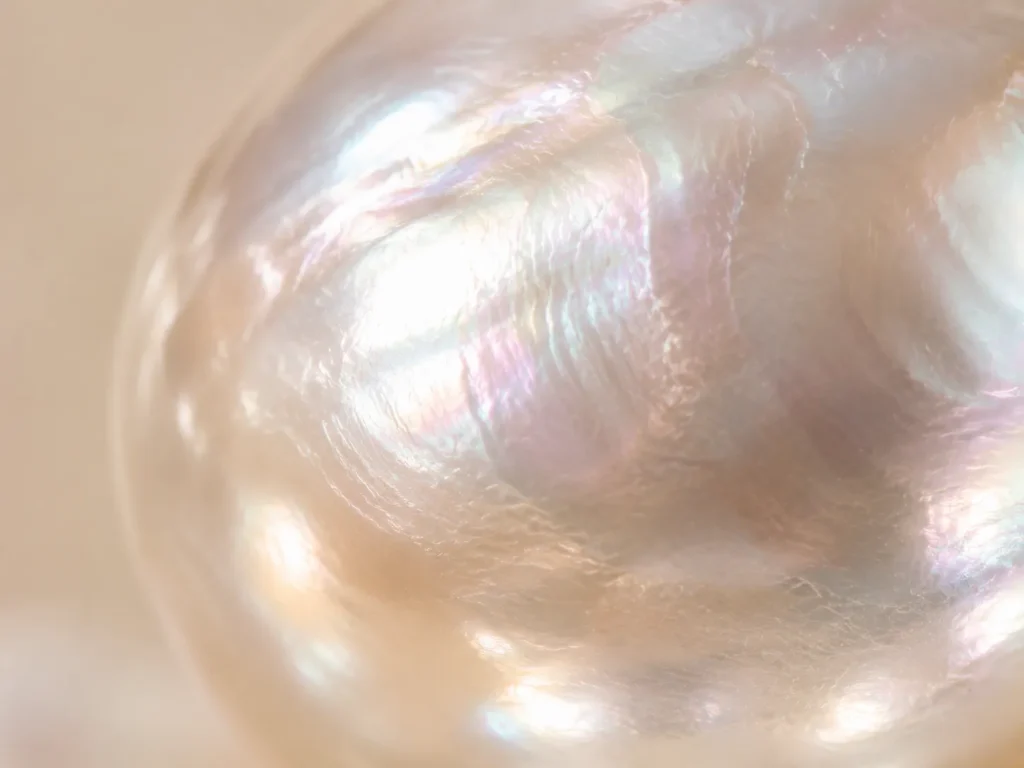
Several factors contribute to the color of a naturally colored pearl. They are closely connected, so no single factor explains every pearl.
1. The Species of Mollusk
The species that produces a pearl is one of the most important influences on its typical color range.
Different oysters and mussels produce pearls with different characteristic appearances. For example:
- Akoya pearls are commonly white, cream, or silver, sometimes with pink or green overtones.
- Tahitian pearls are known for dark bodycolors that may include gray, green, silver, and peacock-like combinations.
- South Sea pearls are commonly white, silver, and golden.
- Freshwater pearls occur in a broad range of colors, including white, cream, pink, peach, lavender, and other shades.
These are typical color ranges, not strict rules. Individual pearls can vary, even when they come from the same species or pearl farm.
2. Pigments and Biological Factors
Natural pearl color is partly influenced by pigments and other biological characteristics associated with the mollusk.
The mantle tissue of a mollusk plays an important role in producing shell material and pearl-forming tissue. Biological differences between species and individual animals can influence the materials deposited during pearl development.
Pigments may contribute to the pearl’s bodycolor, while the composition and structure of its nacre influence the way that color appears.
However, pearl color is not simply a matter of one pigment producing one specific shade. The final appearance reflects a more complex interaction between biological materials and the pearl’s layered structure.
3. Nacre Structure
Nacre is the material responsible for much of a pearl’s characteristic appearance. It consists primarily of microscopic aragonite crystals arranged within an organic matrix.
These layers interact with light in ways that contribute to a pearl’s luster, depth, and sometimes iridescent appearance.
Differences in the thickness, arrangement, and structure of nacre can influence how light is reflected, scattered, and transmitted. This helps explain why pearls with similar bodycolors may display different visual effects.
A pearl’s color is therefore not always a flat, uniform shade. Its layered structure gives it depth and can create subtle variations as the viewing angle changes.
4. Growing Conditions
The environment in which a mollusk lives can influence its overall health and the development of a pearl. Factors such as water quality, temperature, nutrition, and other environmental conditions can affect mollusk growth and pearl formation.
These conditions may contribute to variations in pearl characteristics, including appearance and quality. However, it would be misleading to say that a particular water temperature or diet directly produces a specific pearl color in every case.
The relationship between growing conditions and pearl color is complex, and biological differences remain important.
What Is the Difference Between Pearl Bodycolor, Overtone, and Orient?
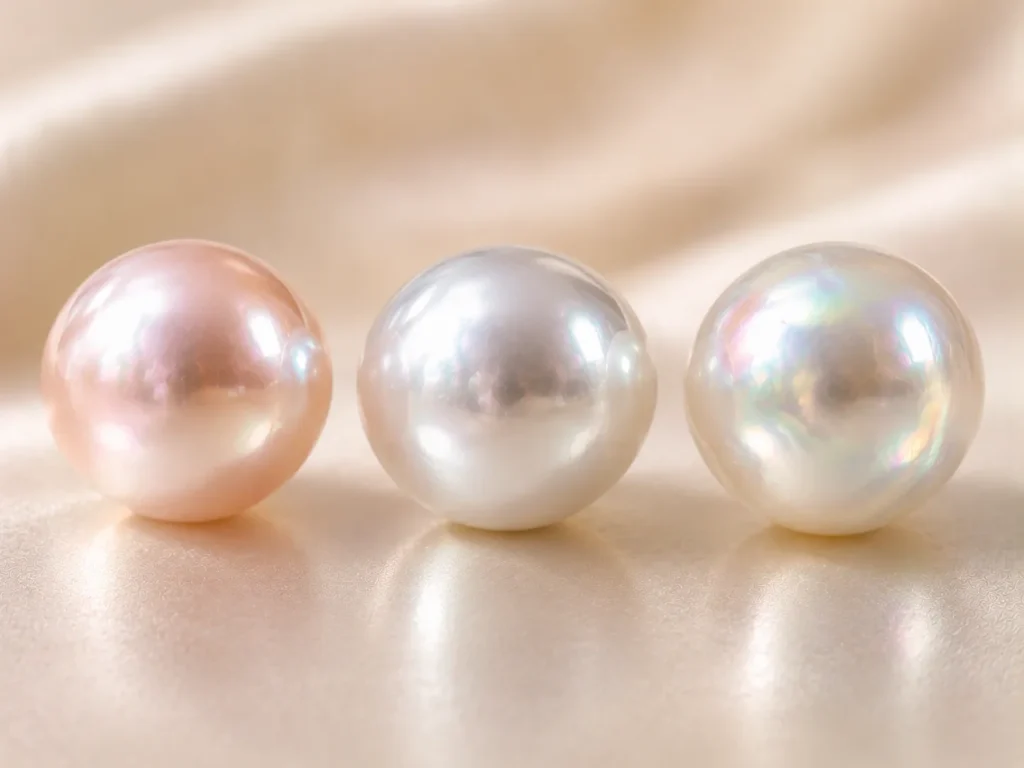
To understand pearl color properly, it helps to know three terms used to describe a pearl’s appearance: bodycolor, overtone, and orient.
They describe different visual characteristics, and together they give a more complete picture of a pearl’s color.
Bodycolor
Bodycolor is the main overall color of a pearl. It is the first color most people notice when looking at one.
Common bodycolors include:
- White
- Cream
- Pink
- Peach
- Silver
- Gold
- Gray
- Green
- Black
A pearl may have a single dominant bodycolor, although its appearance can also be influenced by overtones and other optical effects.
Overtone
An overtone is a subtle secondary color that appears over the pearl’s bodycolor. It can give the surface more depth and create a soft color impression that changes slightly under different lighting conditions.
For example, a white pearl may display a pink, silver, or green overtone. A dark Tahitian pearl may show green, blue, or purple nuances.
Overtones are particularly noticeable when a pearl has strong luster and a reflective surface.
Orient
Orient refers to the delicate iridescent effect seen in some pearls, where multiple colors appear to shimmer or shift across the surface as the pearl moves or the viewing angle changes.
It is not simply another name for overtone. While an overtone is generally described as a secondary color, orient refers to a more complex play of iridescent colors.
These distinctions are useful when comparing pearls. Two pearls may share the same bodycolor but look quite different because their overtones, orient, and luster are not the same.
What Are the Different Natural Pearl Colors?
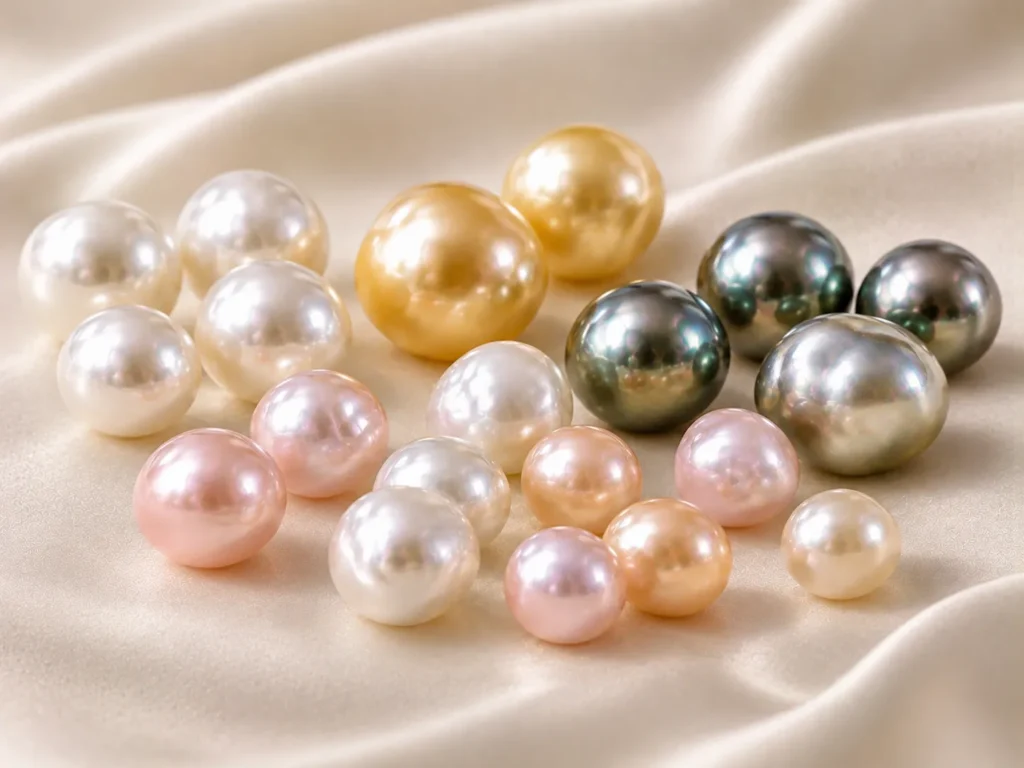
Pearls occur in a wide variety of natural colors. Some shades are strongly associated with particular pearl types, while others appear across several varieties.
White Pearls
White is one of the most familiar pearl colors and remains a popular choice for classic pearl jewelry.
White pearls may have cream, pink, silver, or other subtle overtones. Akoya and South Sea pearls are particularly well known for their white and light-colored varieties, although white freshwater pearls are also widely available.
The appearance of a white pearl depends on more than its bodycolor. Luster, surface quality, and overtone all influence whether it looks bright, soft, warm, or cool.
Cream and Champagne Pearls
Cream and champagne pearls have warmer tones than bright white pearls. Their color can range from pale ivory to richer golden-beige shades.
These colors are commonly associated with South Sea pearls and also occur in freshwater and other pearl varieties.
Their warm appearance makes them popular with people who prefer a softer alternative to bright white.
Pink and Peach Pearls
Pink and peach pearls can range from delicate blush tones to warmer, more noticeable shades.
These colors are often seen in freshwater pearls, although pink overtones may also appear in some white Akoya pearls.
A pink pearl’s appearance can be subtle or pronounced, depending on its bodycolor, overtone, and luster.
Silver and Gray Pearls
Silver and gray pearls have cool, understated tones. They may appear almost white in certain lighting or display darker metallic-looking reflections.
Silver is a familiar color in Akoya and South Sea pearls, while gray is commonly associated with Tahitian pearls.
Some gray pearls also display green, blue, or purple overtones, adding complexity to their appearance.
Golden Pearls
Golden pearls are especially associated with South Sea pearls. Their color can range from pale champagne and light gold to rich, deep golden tones.
The intensity and appeal of a golden pearl depend on its overall color, luster, surface quality, and other characteristics.
Rich golden South Sea pearls are often highly sought after, although not every golden pearl has the same quality or value.
Black and Dark Pearls
Dark pearls are most strongly associated with Tahitian pearls. Their bodycolors may include charcoal, dark gray, green, silver, and other deep tones.
The term “black pearl” is commonly used in the jewelry market, but many Tahitian pearls are not completely black. Their colors can be complex, with visible overtones that become more noticeable under different lighting.
A particularly distinctive appearance is often described as peacock, referring to a combination of dark green with hints of other colors.
Lavender and Other Unusual Colors
Some freshwater pearls display lavender, purple, or other less conventional colors.
These shades add to the diversity of freshwater pearls and are one reason the category offers such a broad range of color choices.
As with other pearl colors, the appearance of an individual pearl depends on its biological origin, nacre characteristics, and whether any color treatment has been applied.
Explore the different types of pearls to learn how freshwater, Akoya, Tahitian, and South Sea pearls differ in appearance and characteristics.
Why Are Tahitian Pearls So Dark?
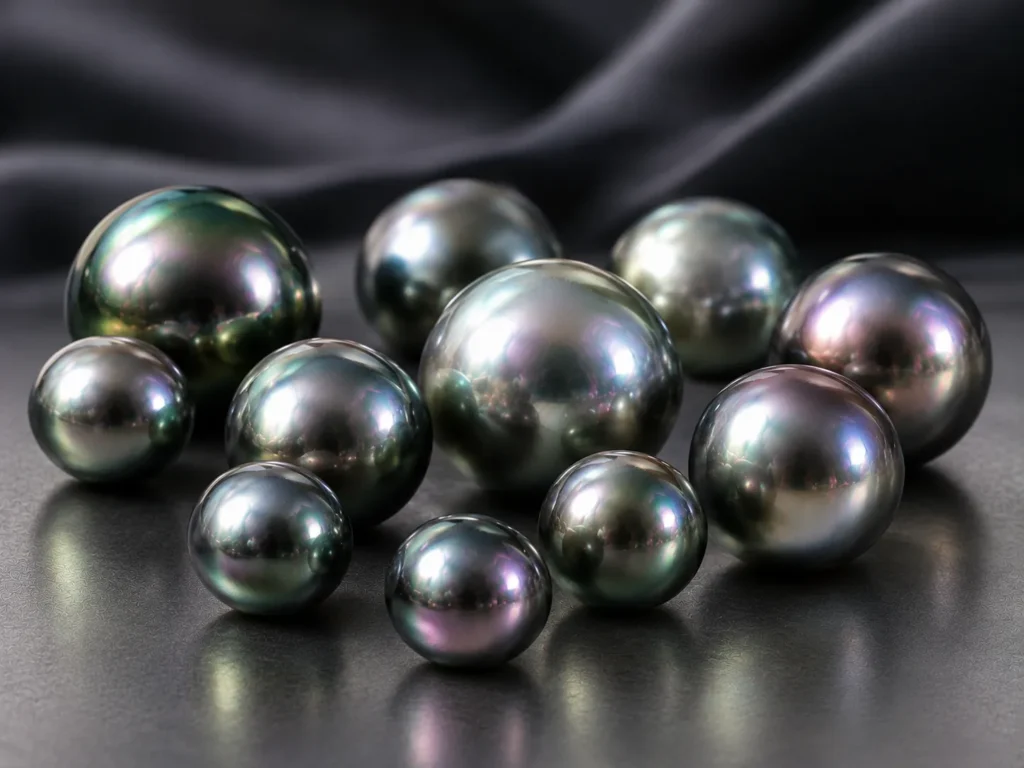
Tahitian pearls are known for their naturally dark bodycolors, which can range from charcoal and gray to green and other deep shades.
They are produced by the black-lipped pearl oyster, Pinctada margaritifera. The natural characteristics of this species contribute to the distinctive color range associated with Tahitian pearls.
Despite the name “black pearl,” many Tahitian pearls are not uniformly black. Their surfaces may show green, silver, blue, purple, or peacock-like overtones.
This variation is part of their appeal. Rather than being judged by darkness alone, Tahitian pearls are evaluated for their overall color, luster, surface quality, shape, and size.
It is also important to distinguish naturally dark Tahitian pearls from dyed pearls that have been treated to create a dark appearance.
Are Naturally Colored Pearls Different From Dyed Pearls?
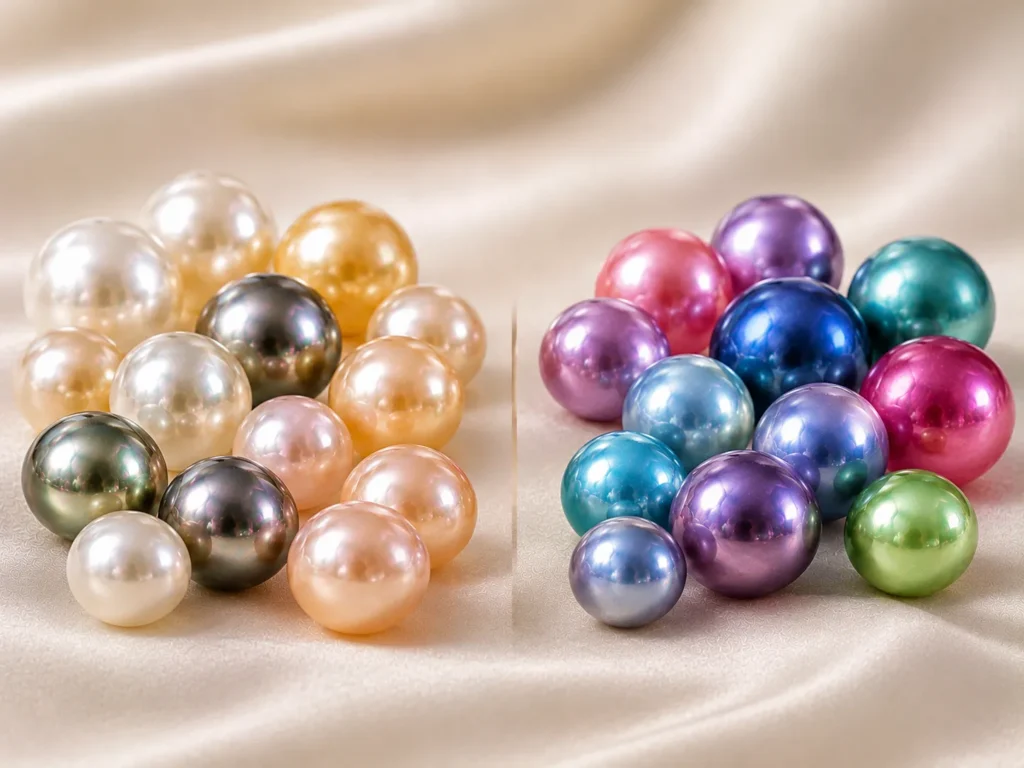
Yes. Naturally colored pearls develop their color through the biological and structural processes involved in pearl formation. Dyed pearls, on the other hand, have been treated after formation to change or enhance their appearance.
Pearl treatments are used in the jewelry industry, and some treated pearls can be attractive and suitable for jewelry. The important point is that treatments should be disclosed accurately when they are relevant to a purchase.
Common treatments include:
- Dyeing: A coloring substance is used to change or deepen the pearl’s color.
- Irradiation: Radiation treatment can alter the appearance of certain pearls, sometimes producing darker or metallic-looking tones.
- Bleaching: A treatment used to lighten or even out the color of some pearls.
- Color enhancement: Some processes are used to modify or improve the appearance of a pearl’s color.
Not every pearl with an unusual or intense color has been treated. Some pearls naturally display vivid colors, while others may have been modified. Appearance alone is not always enough to determine whether a pearl is natural in color or treated.
When buying pearls, ask whether the color is natural or treated and whether any known treatments have been disclosed. For valuable or important purchases, a qualified gemologist or reputable gemological laboratory can provide additional assessment.
For another important distinction in pearl classification, read our guide to natural pearls vs. cultured pearls.
Does Pearl Color Affect Value?
Pearl color can influence value, but there is no universal rule that one color is always more valuable than another.
The desirability of a particular color depends on the pearl type, the strength and attractiveness of its color, market demand, and individual preferences.
For example, rich golden colors are often sought after in South Sea pearls. Certain overtones and color combinations can make Tahitian pearls particularly desirable. White Akoya pearls with attractive pink or silver overtones are also popular.
However, color is only one part of pearl quality. Luster, surface condition, shape, size, and nacre characteristics all matter.
A beautiful color cannot compensate for every weakness in a pearl, just as a pearl with a less common color is not automatically more valuable.
When comparing pearls, consider the complete appearance rather than focusing on color alone.
Color is only one part of the picture. Learn more about pearl quality and the characteristics that influence a pearl’s overall appearance and value.
How Can You Choose the Right Pearl Color?
Choosing a pearl color is partly a matter of personal taste, but a few practical considerations can help.
Consider Your Skin Tone
Some people prefer warm pearl colors, such as cream, peach, and gold, while others find cool white, silver, and gray tones more appealing.
There is no strict rule about which color suits a particular skin tone. Comparing pearls in natural light is often the easiest way to decide which shades you prefer.
Think About How You Will Wear Them
White and cream pearls are versatile choices for everyday jewelry and formal occasions. Pink and peach pearls offer a softer, warmer appearance, while dark Tahitian pearls can create a more distinctive look.
Golden South Sea pearls are often chosen for their rich, warm character.
Compare the Overtone and Luster
Do not judge a pearl by its bodycolor alone. Look at how clearly it reflects light and whether its overtone complements the main color.
A pearl with attractive luster and balanced color can look more appealing than one with a stronger but less harmonious shade.
Check Whether the Color Is Natural or Treated
If color origin matters to you, ask the seller for clear information. This is particularly important when considering unusually vivid colors or pearls described as rare.
Transparent information about treatments helps you compare pearls fairly and understand what you are buying.
Frequently Asked Questions
What is the rarest natural pearl color?
There is no single color that can be called the rarest across all pearl types. Rarity depends on the mollusk species, pearl variety, and the specific color being considered. Certain natural color combinations and exceptional examples can be particularly uncommon.
Are black pearls naturally black?
Some pearls, especially Tahitian pearls, naturally develop dark bodycolors. However, many are actually gray, green, silver, or other deep shades rather than completely black. Some dark pearls sold in the market may also have been treated.
Are pink pearls naturally pink?
Yes. Some pearls naturally develop pink or peach bodycolors. Pink overtones can also appear on pearls whose main bodycolor is white. However, dyed pink pearls are also available, so color alone does not establish whether a pearl has been treated.
Why do some white pearls look pink?
A white pearl may display a pink overtone. This subtle secondary color interacts with the pearl’s main bodycolor and luster, creating a soft blush-like appearance.
Do freshwater pearls have more colors than saltwater pearls?
Freshwater pearls are known for their broad range of colors, including white, cream, pink, peach, and lavender. Saltwater pearls also display considerable color variation, from white and silver to gold and dark Tahitian shades. The available colors depend on the pearl-producing species and variety.
Can pearl color fade over time?
Pearls can change in appearance with age, exposure, wear, and storage conditions. Surface buildup, damage, or changes to treated color may affect how a pearl looks. Proper care and storage help preserve its appearance.
Are naturally colored pearls more valuable than dyed pearls?
Not automatically. Natural color can be an important consideration, particularly when it is rare and attractive, but value also depends on pearl type, luster, surface quality, shape, size, and market demand. Treated pearls can also be attractive, provided their treatment is accurately disclosed.
Final Thoughts
Pearls have different colors because their appearance is shaped by a combination of biological characteristics, nacre structure, and the way light interacts with their surfaces. The species of mollusk, pigments, growing conditions, and other factors all contribute to the remarkable range of colors found in pearls.
From classic white and warm champagne to golden South Sea and dark Tahitian pearls, each color has its own character. Bodycolor, overtone, and orient add further depth, making every pearl’s appearance a little different.
Understanding these differences helps you look beyond color alone. Whether you prefer the simplicity of white pearls, the warmth of golden tones, or the depth of dark pearls, knowing what creates their color makes it easier to appreciate their natural beauty and choose with confidence.